 Skip to content


Architecture does not end at the walls of a building; it extends into the landscape, the courtyards and the terraces. For architects and interior designers, outdoor lighting is not simply a matter of security or visibility — it is a narrative tool capable of transforming spatial perception, highlighting textures and creating a fluid continuity between inside and out (“In & Out”).
At Insolit we understand that light in open spaces requires a perfect balance between technical resistance and refined aesthetics. Below we dive into the strategies, technologies and designer luminaires that are defining the standards of luxury outdoors.
The technical and aesthetic duality in outdoor projects
When tackling an outdoor lighting project, the specifier faces a double challenge: the luminaire must withstand the weather without losing its aesthetic integrity and, at the same time, must offer a quality of light comparable to that of the most sophisticated interiors.
Resistance and materiality: machined aluminium
The main enemy of outdoor lighting is corrosion and UV degradation. That’s why at Insolit we are committed to machined aluminium and AISI 316 stainless steel. Unlike low-quality castings, machined aluminium offers a precision of finishes and superior durability.
Our collections, treated with front rings and rear caps in matte anodised black, guarantee that the piece remains unaltered over time. This level of finish is crucial in high-end residential projects and hospitality, where the constructive detail is scrutinised under a magnifying glass.
The protection rating: IP65 as a standard
To guarantee the longevity of the installation, it is imperative to work with the right protection ratings. While IP44 may be enough for semi-covered areas or bathrooms, exposed outdoor lighting requires IP65. This ensures total tightness against dust and protection against water jets, ideal for gardens with automatic irrigation systems or coastal areas exposed to salt humidity.
Lighting strategies for landscape design
Designing light in a garden or terrace means hierarchising the space. It is not about lighting everything equally, which would flatten the environment, but about creating contrasts, shadows and focal points.
1. Accent lighting and vegetation

Vegetation is a living canvas. To highlight trees, shrubs or stone-wall textures, the use of spike projectors is the most versatile solution. They let you relocate the light source as the plant grows.
The Focus Line Spike model is a perfect example of this versatility. Its machined aluminium body and AISI 316 stainless-steel stake ensure stability in the ground. By allowing the use of replaceable GU10 LED bulbs, it gives the designer the freedom to choose the colour temperature and exact beam angle for each plant species, while making long-term maintenance easier.
2. Path marking: marking the way with elegance
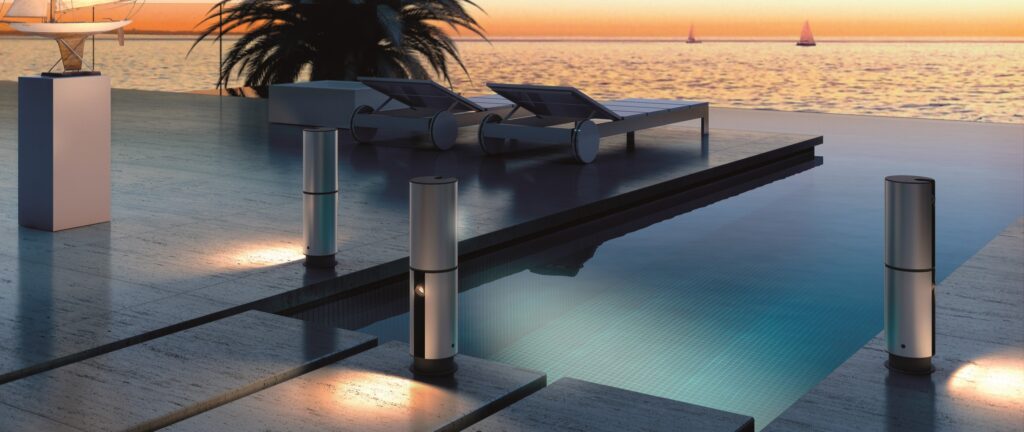
Path-marking serves a guiding function but aesthetically must remain subtle and avoid glare to passers-by. This is where the luminaire’s design plays a crucial role.
The Banus luminaire redefines the concept of a beacon. It is not just a static point of light; it is an accent and path-marking micro-projector with 135° vertical rotation. This lets you direct the beam towards the ground to mark a path, or tilt it slightly to wash a low wall or an adjacent planter.
For situations requiring greater complexity, the Banus Twice incorporates two micro-projectors. The upper one offers a 350° horizontal rotation, allowing you to light a path and, simultaneously, a vertical element placed in another direction. This “dual function” capability declutters the landscape of excessive luminaires, keeping the project’s minimalist aesthetic.
3. The “Nomad” trend: portable lighting
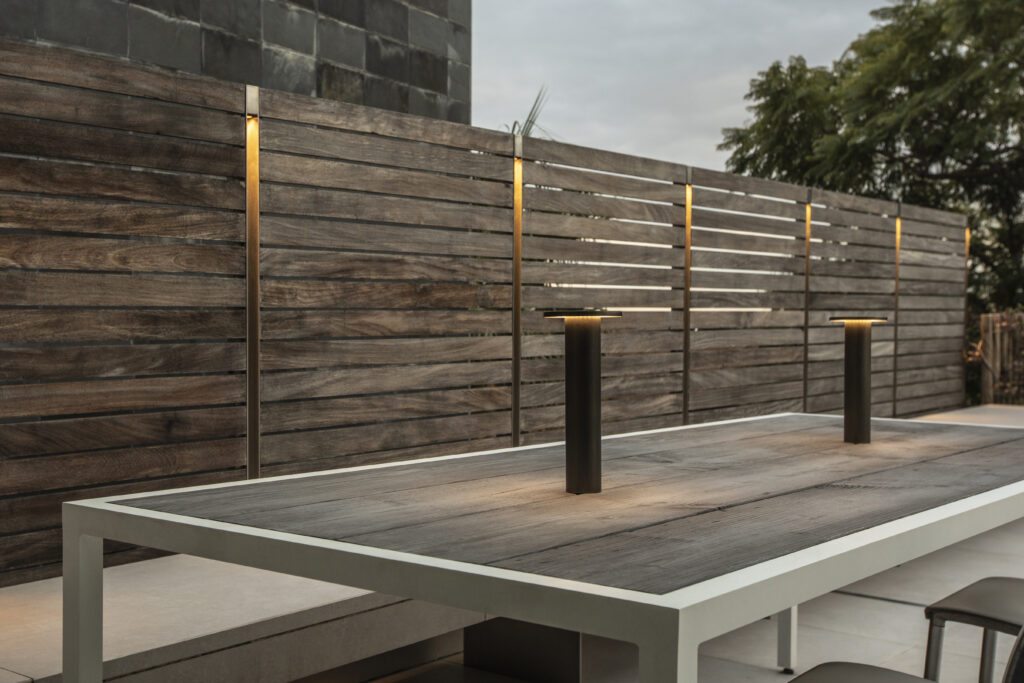
One of the strongest trends in terrace and contract design is flexibility. Users want to be able to move the light according to the occasion: an intimate dinner, reading on the sun lounger or a social gathering.
Battery-powered portable lamps have revolutionised outdoor lighting. Without cables, light becomes an object of desire.
- Basic: with its machined aluminium body and polycarbonate diffuser, it offers a soft, dimmable light. Its essential design fits any decorative style.
- LC: brings an extra touch of warmth and romance by incorporating a candle holder on the top with a magnetic lid. It combines touch LED technology with the ancestral warmth of a real flame, ideal for exclusive restaurant tables or private terraces.
Comparative table: selecting luminaires by application
To help with specification in your projects, we have put together this table that links the product type with its ideal outdoor use:
| Type of luminaire | Recommended Insolit product | Ideal application | Key feature |
| Portable | Basic / LC | Coffee tables, outdoor dinners, chill-out zones. | Freedom of movement, rechargeable battery, dimmable. |
| Spike | Focus Line Spike | Gardens, tree lighting, large planters. | Direct ground installation, relocatable, GU10 replaceable. |
| Adjustable beacon | Banus / Banus Twice | Paths, walkways, perimeter delimitation. | 135°/350° orientation, minimalist design. |
| Floor projector | Focus Line Floor IP 65 | Paved terraces, entrances, areas without soil. | Stable base, architectural design, IP65. |
| Surface projector | Focus Line IP 65 | Walls, pergolas, facades. | Optional magnetic base, mounting versatility. |
Sustainability and maintenance: the replaceable-source philosophy
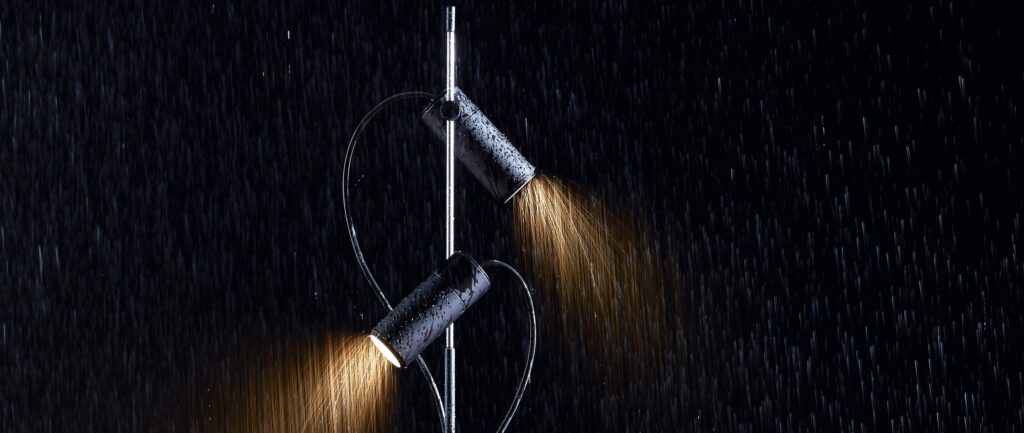
In the luxury lighting sector, sustainability is a fundamental pillar. Many outdoor products integrate the LED in such a way that, if it fails, the entire luminaire must be discarded. At Insolit, we challenge this planned obsolescence with our Focus Line collection.
Models such as the Focus Line IP 65 or the Focus Line Floor Spike are designed to take replaceable GU10 LED bulbs. This offers multiple advantages to the architect and the end client:
- Long product lifespan: the machined aluminium body lasts decades; if LED technology advances or the bulb fails, only the light source is changed, not the lamp.
- Lighting customisation: you can change the colour temperature (3000K to 2700K) or the beam angle as the garden’s needs change, without uninstalling the luminaires.
- Ease of maintenance: the user can carry out the change without the need for complex tools or specialised technical assistance.
The importance of colour temperature outdoors
Choosing the right colour temperature is vital for the night-time atmosphere. In residential and hospitality outdoor lighting, we recommend avoiding cool temperatures (4000K or above), which can be aggressive and “flatten” the colours of nature.
- 3000K (warm white): the standard for modern exteriors. It enhances the greens of the vegetation and offers clear, crisp visibility of the architecture.
- 2700K (very warm white): ideal for seating areas, pergolas and terraces where an intimate, relaxed atmosphere is sought. It also works very well with materials such as wood or natural stone, accentuating their warm tones.
Our products, by accommodating GU10 bulbs or integrating high-quality LEDs (CRI>90), ensure faithful colour rendering, making the landscape project look vibrant even in the depths of night.
Structures and heights: breaking flatness
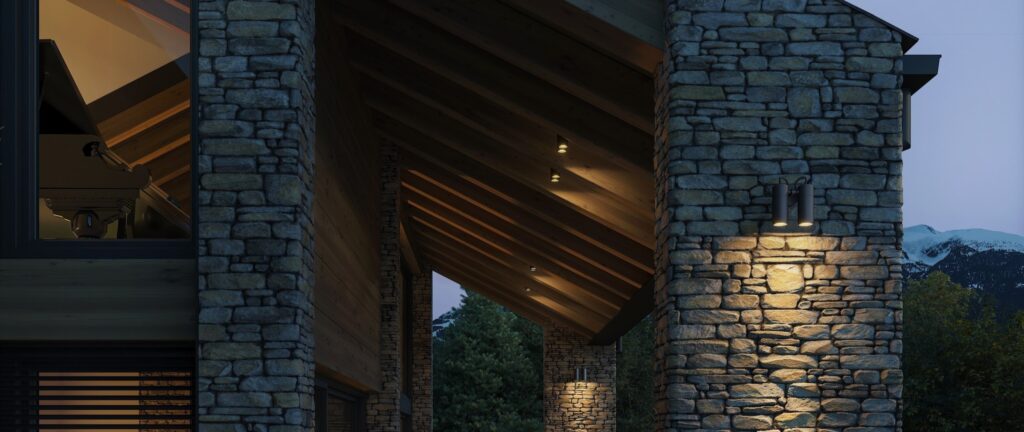
A common mistake is placing all the lighting at ground level or on wall sconces. To create depth, you need to play with heights.
The Focus Line Floor IP 65 lets you raise the point of light above the pavement. Available in single or double version, this luminaire acts as a functional sculpture. By raising the light source, we can project downwards to light a table or an object, or upwards to highlight an architectural element without risk of direct glare to the eyes. Its stainless-steel support guarantees stability and resistance against wind or accidental impacts.
Light that defines spaces: outdoor lighting
Outdoor lighting is the finishing touch that defines the character of an architectural work. It transforms a night-time black hole into an inhabitable, safe and aesthetically striking setting.
At Insolit, we design and manufacture light tools for the demanding specifier. From the versatility of the Focus Line family to the portable elegance of Basic and LC, our luminaires are made to withstand the outdoors and celebrate design. We invite architects and distributors to discover how our engineering in machined aluminium can elevate the perceived value of their outdoor spaces.
Frequently asked questions about outdoor lighting
What is the best lighting for outdoors?
The best outdoor lighting is one that combines a high protection rating (IP65 or above) with corrosion-resistant materials such as anodised machined aluminium or stainless steel. It must also be versatile, allowing glare control and beam orientation. Luminaires such as Insolit’s Focus Line IP 65 collection are ideal because they offer robustness and the possibility of replacing the light source (GU10), ensuring durability and sustainability.
What type of light is used outdoors?
Three main types of light are used outdoors:
- Accent light: projectors (such as Focus Line Spike) to highlight trees, sculptures or facades.
- Path-marking light: low luminaires (such as Banus) to mark paths and stairs without dazzling.
- Ambient or general light: provided by wall sconces, floor lamps or portable lamps (Basic or LC) for seating areas and tables.
It is essential to use LED technology for its energy efficiency and low heat emission, which protects the plants.
Which light colour is best for outdoors?
For high-end residential and hospitality projects, warm colour temperatures are recommended.
- 3000K: the most versatile option; offers a warm white light that enhances the greens of vegetation and defines architecture well.
2700K: brings a more intimate, welcoming and relaxing atmosphere, ideal for resting areas, chill-outs and terraces with wood or stone finishes.
Cool lights (4000K-6000K) should be avoided since they create an artificial atmosphere and may increase light pollution.
Conclusion
Lighting the outdoors with intent means balancing technical resistance, efficiency and aesthetic sensibility to sculpt the night-time landscape. If you are looking for luminaires designed and manufactured to withstand the elements without compromising on design, discover the Insolit outdoor lamps collection.