 Skip to content

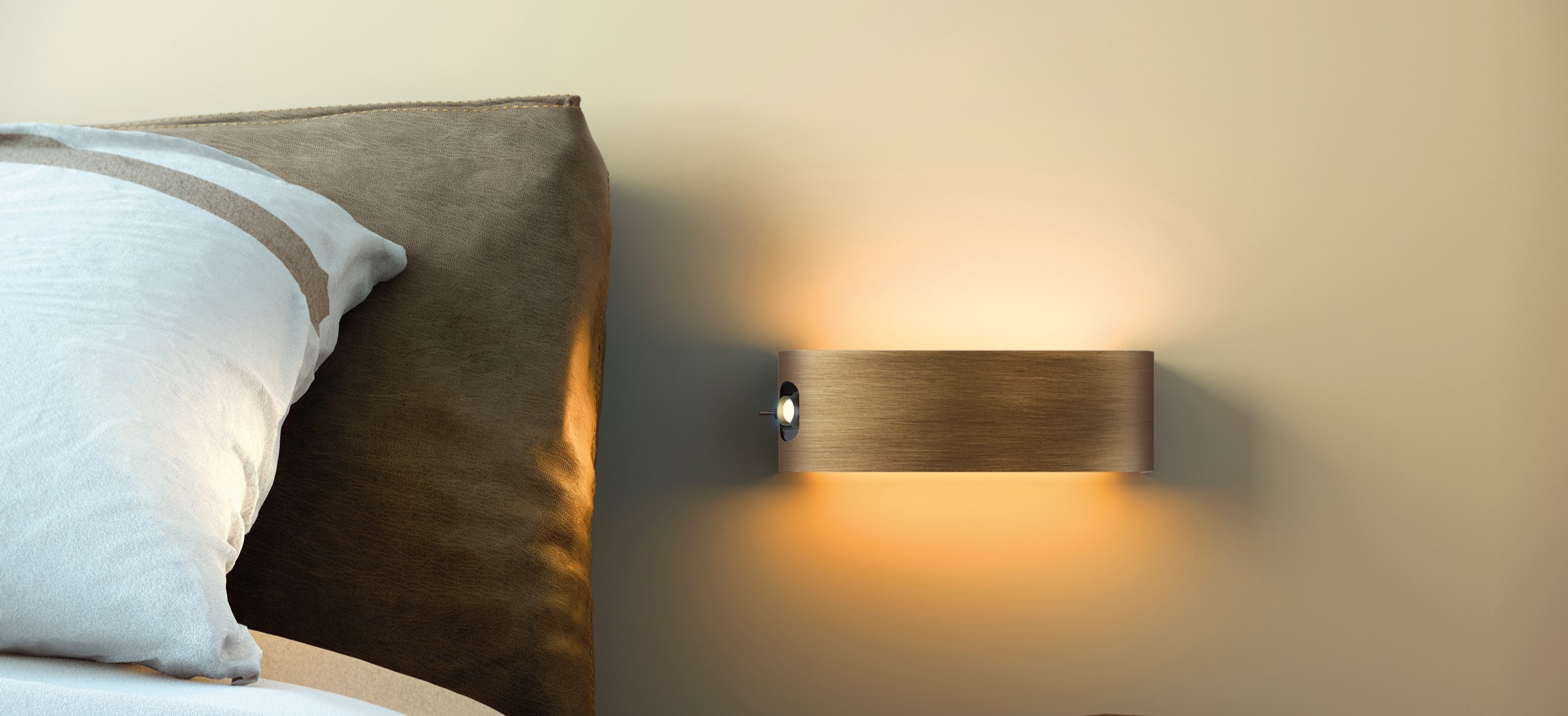
The classic bedside table lamp is the one that sits on the nightstand: a base, a shade, resting directly on the piece of furniture. It’s the most common option, but not the only one, and in bedrooms where nightstand space is limited, or where a cleaner look is the goal, the wall-mounted light installed beside the headboard is gaining ground, without taking up a single centimetre of the surface below.
This second route has an advantage that’s rarely considered until it’s actually lived with: fixed to the wall, the height of the light always stays exactly right relative to the person lying down, something that with a table lamp depends on how tall the nightstand itself happens to be, whether it has drawers that raise it, or how much has piled up on top of it over time. It also frees up the entire surface of the furniture: no cord crossing the nightstand, no base stealing space from the alarm clock, the books or the glass of water.
There’s also a deeper reason that almost never gets mentioned: a table lamp can be knocked over by accident, and the cord is always exposed, within reach of children or pets. A piece fixed to the wall removes that risk entirely, and over time the nightstand itself can be changed, moved, or even done away with altogether, without the bedroom’s lighting ever depending on that piece of furniture.
At Insolit, this is the route we take. Our bedroom collection focuses on wall-mounted pieces, designed specifically to be installed beside the headboard, not on corded table lamps. If you’re looking for a cordless or traditional table-style bedside lamp, that’s not what we currently make, and we’d rather tell you so with the same clarity we design with, before you reach the product page expecting something else. What we do offer are two wall-mounted solutions built for this exact corner of the bedroom, each with its own character.
Stick Bed: precise reading light beside the headboard
Stick Bed is a slim light bar designed to be installed exactly beside the headboard. Its adjustable design directs the beam toward the book or the phone without that pool of light spilling into the rest of the room or disturbing whoever is sleeping next to you.
The logic behind this piece is simple, and that’s exactly why it works so well: instead of lighting the whole bed area, it concentrates the light exactly where it’s needed and nowhere else. It’s the choice for anyone who reads before sleeping on a regular basis and needs a bedside lamp that genuinely illuminates the page, not just the general mood of the room. Made from machined aluminium, it also keeps the same aesthetic language as the rest of the Stick collection, a detail worth noting if other luminaires from the same family already live elsewhere in the house.
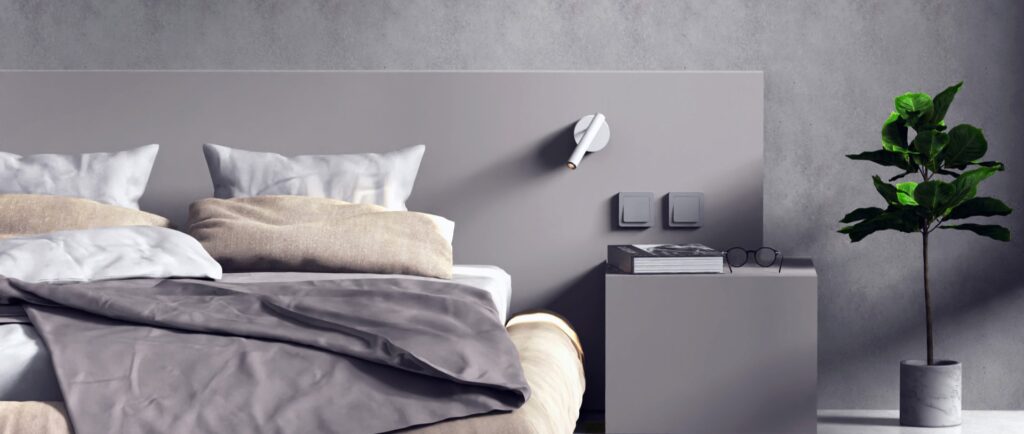
Spy: two lights in a single piece
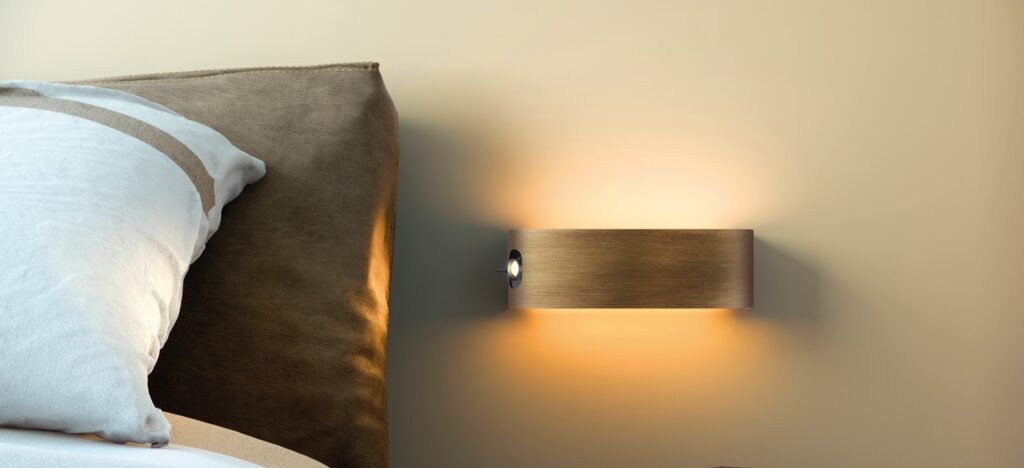
Spy solves something most bedside lamps don’t: bringing together direct reading light and indirect ambient light in a single piece. The reading light is adjustable, machined in aluminium; the body, in extruded aluminium with a frosted polycarbonate diffuser, provides that second, softer, more enveloping layer of light, meant for the moment when precision is no longer needed, just a point of calm before switching off completely.
It’s the bedside table lamp for anyone who wants a single piece capable of covering both real needs of the bedroom: reading comfortably and, a while later, dimming the light down until it’s almost dark without having to get up to turn anything else off. By bringing two independent light sources together in one body, it also simplifies installation compared with combining two separate pieces beside the bed.
What to check before choosing your bedside table lamp
- Type of light: direct and adjustable if you read in bed regularly; indirect and diffused if you’re only after atmosphere before sleeping.
- Colour temperature: warm, between 2700K and 3000K, the range that interferes least with sleep.
- Installation height: for wall-mounted models, the usual reference is around 60-70cm above the mattress, adjusted to the height of each headboard.
- Dimming: being able to lower the light almost to nothing before sleeping makes a real difference to the quality of rest, especially when sharing a room.
- Installation type: Stick Bed and Spy are fixed wall installations, not plug-in or battery-powered, worth bearing in mind if the idea is to move them around frequently.
The table below summarises the key differences between Insolit’s two pieces for this corner of the bedroom:rmitorio:
| Stick Bed | Spy | |
| Type of light | Direct, adjustable | Direct (reading) + indirect (ambient) |
| Material | Machined aluminium | Extruded and machined aluminium |
| Diffuser | Adjustable beam | Frosted polycarbonate |
| Installation | Wall, fixed | Wall, fixed |
| Best for | Precise reading beside the headboard | Combining reading and ambience in one piece |
If your priority is reading alone, and you’d rather keep the rest of the bedroom’s lighting separate, Stick Bed is the more direct answer. If instead you’re after solving both needs, reading and atmosphere, with a single installation beside the bed, Spy is the more complete solution.
If you’d also like to rethink the whole bedroom’s lighting beyond the nightstand, our guide to bedroom ceiling lamps goes deeper into how to combine general and reading light across the whole room, and how that ceiling light works together with the wall pieces we’ve covered here.
Frequently asked questions
There’s no single technical name: it’s known as a bedside table lamp, bedside lamp or night lamp, or in the case of wall-mounted models like Stick Bed or Spy, a headboard wall light.
For table models, as a general reference it shouldn’t exceed a third of the width of the furniture it sits on. For wall models like Insolit’s, size isn’t what matters, installation height is: around 60-70cm above the mattress.
The trend in designer bedrooms is moving away from the classic table lamp toward wall-mounted solutions that free up nightstand space and combine adjustable reading light with ambient light, exactly as Stick Bed and Spy propose.
A warm light (2700-3000K), low intensity and, if possible, dimmable. It’s best to avoid cool or very white light right before sleeping.
Warm light, closer to red and orange than to blue, is the one that interferes least with the natural sleep rhythm. Blue light, more common in screens and some cool bulbs, is the one worth avoiding in the hours before sleep.