 Skip to content

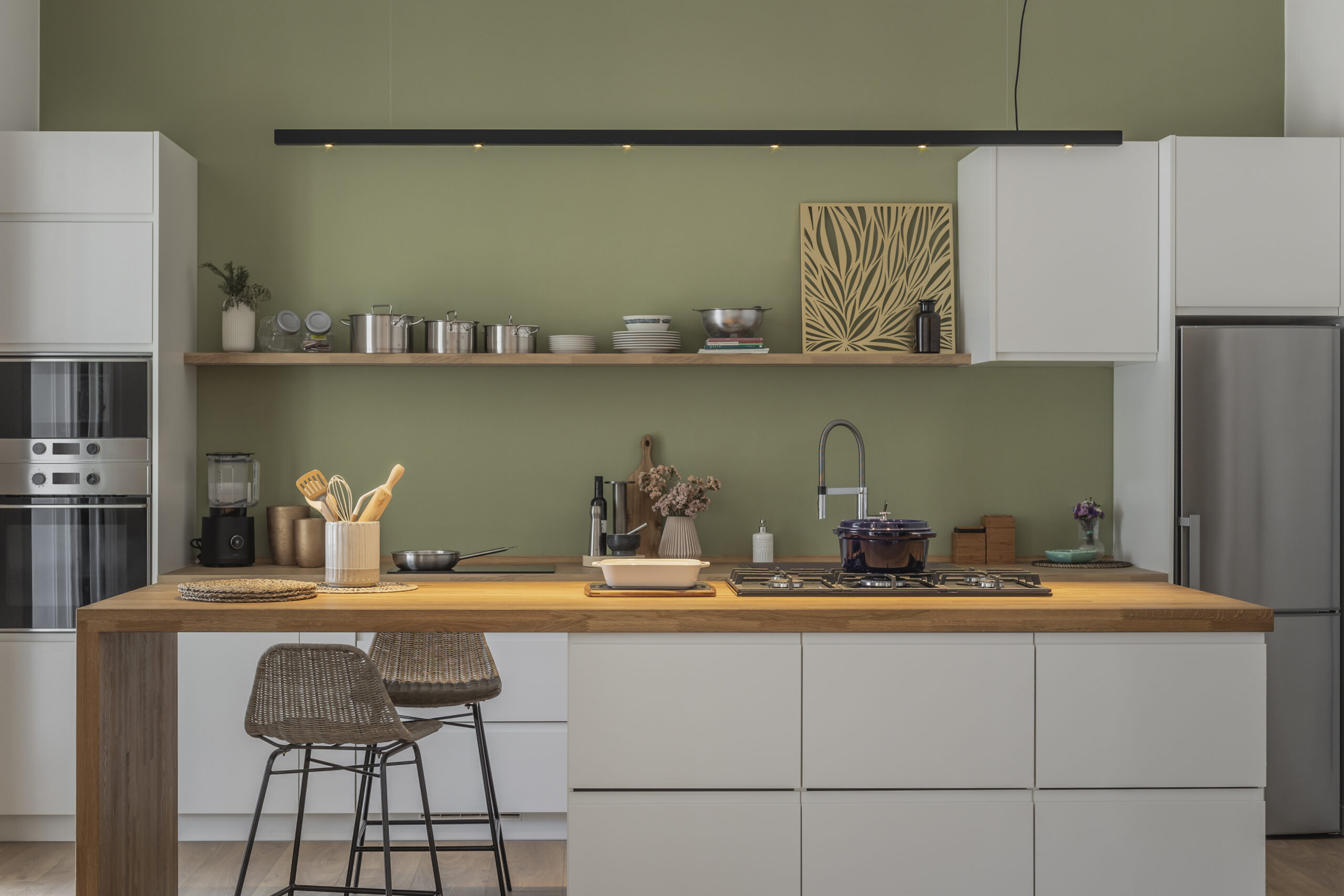
Designer kitchen pendant lights play a fundamental role. They are not mere points of light; they are sculptural elements that define the hierarchy of the space, zone work areas against tasting areas and bring character to the interior design project.
The kitchen has ceased to be a purely utilitarian space to become the social epicentre of the contemporary home. For architects and interior designers, this paradigm shift involves an exciting challenge: designing lighting that responds to very high technical demands —such as the correct colour rendering of food— without sacrificing the visual sophistication required by spaces open to the living room.
TR Line & Up: Linear pendant lamp
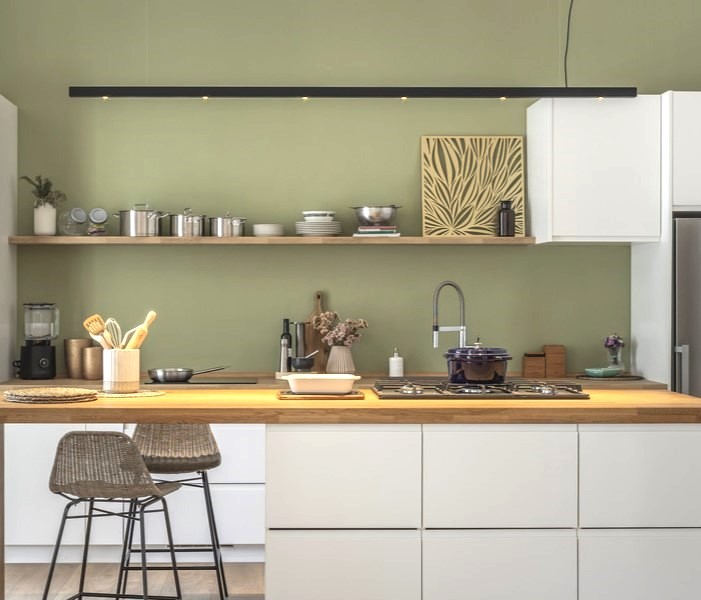
The TR Line & Up is designed to work in parallel with the kitchen island. By placing this suspended piece above a quartz or sintered stone countertop, a mirror effect is created: the line of light reinforces the line of the island.
- Pairing of materials: If the kitchen features polished cement finishes or industrial grey tones, a TR Line Up in a matte black finish brings a graphic and emphatic elegance. Conversely, in white and ethereal kitchens, the white finish allows the lamp to blend into the environment, letting the light be the sole protagonist.
- Bidirectional lighting: Its greatest technical virtue is the ability to emit direct and indirect light. The lower light bathes the work surface with crisp clarity, ideal for food preparation, highlighting the colours and textures of the ingredients. Simultaneously, the upper light is projected towards the ceiling, visually raising the height of the kitchen and providing a soft ambient light that eliminates the “cave” effect.
Focus Line Pendant: Focal pendant lamp
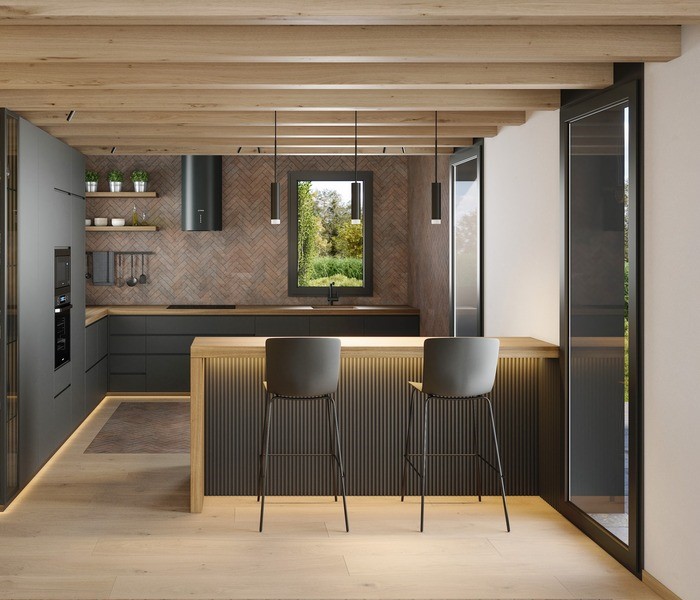
The kitchen is a culinary workshop, and as such, it requires precision light. The Focus Line Pendant makes it possible to direct the beam of light exactly where it is needed, creating areas of visual interest and establishing a hierarchy in the space.
- Play of light and shadow: Unlike flat LED panels that flatten the space, the spotlights of this luminaire create soft shadows that give volume to objects. This is vital to appreciate the three-dimensionality of food and decoration.
- Combination with industrial and contemporary styles: Its technical aesthetic, with orientable heads and a slim profile, fits perfectly in industrial-chic or “all-black” style kitchens. It combines magnificently with brushed steel taps, metal handles and high-end exposed appliances.
- Zoning: It is ideal for long islands that have a dual use: a preparation area and a breakfast bar area. The spotlights can be oriented to intensely illuminate the cutting area, while others can be dimmed or directed towards a back wall to light a decorative shelf, creating depth of field.
TR Up: Circular pendant lamp
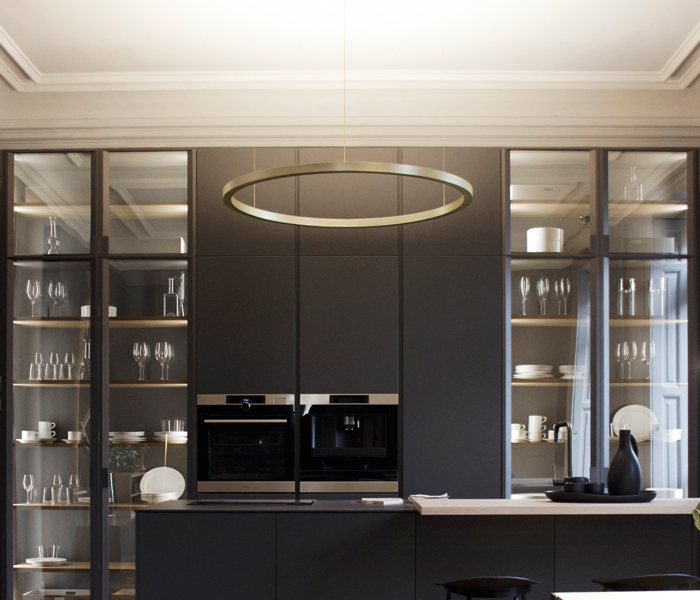
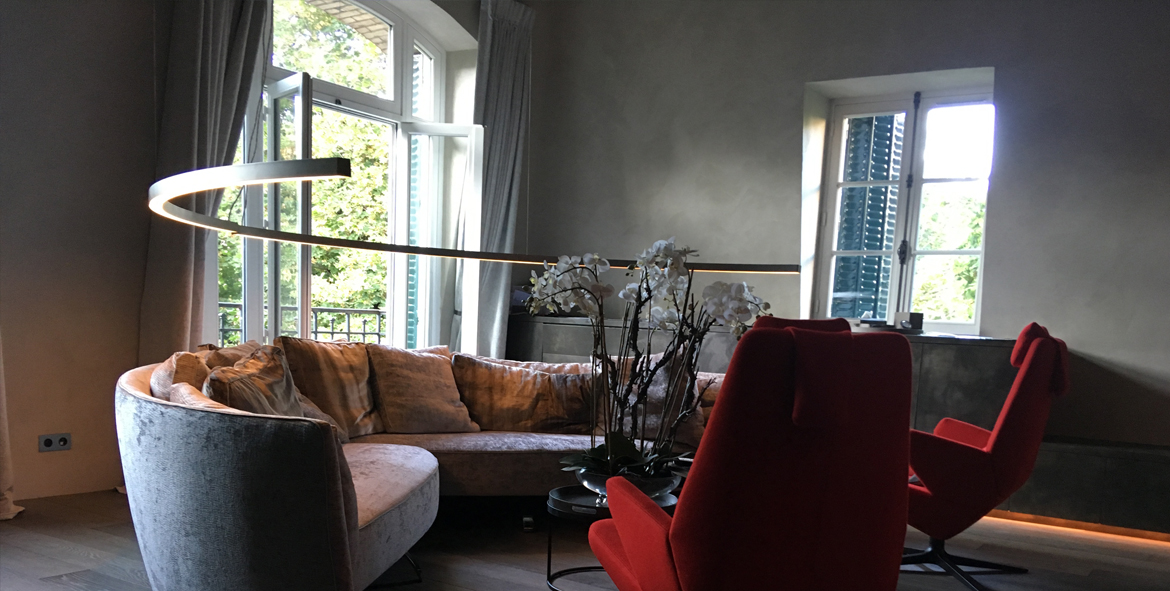
The designer kitchen pendant light TR Up does not only illuminate; it gathers. Its circular shape invites people to come together, subconsciously evoking the idea of home and community.
- Spatial integration: The TR Up works exceptionally well above dining tables integrated into the kitchen or above large square islands. By suspending it, a luminous “sub-space” is created that delimits the dining area without the need for partitions.
- Dialogue with textures: Imagine a kitchen with walnut wood cabinets and a dark stone table. The TR Up, with its continuous halo of light, softens the heaviness of the wood and provides an ethereal counterpoint to the stone. Its presence is sculptural yet light, allowing the gaze to pass through the luminaire, maintaining the sense of spatial openness. It is, in essence, a designer kitchen pendant light that acts as a floating ring of light, providing sophistication without stridency.
Glass: Glass pendant lamp
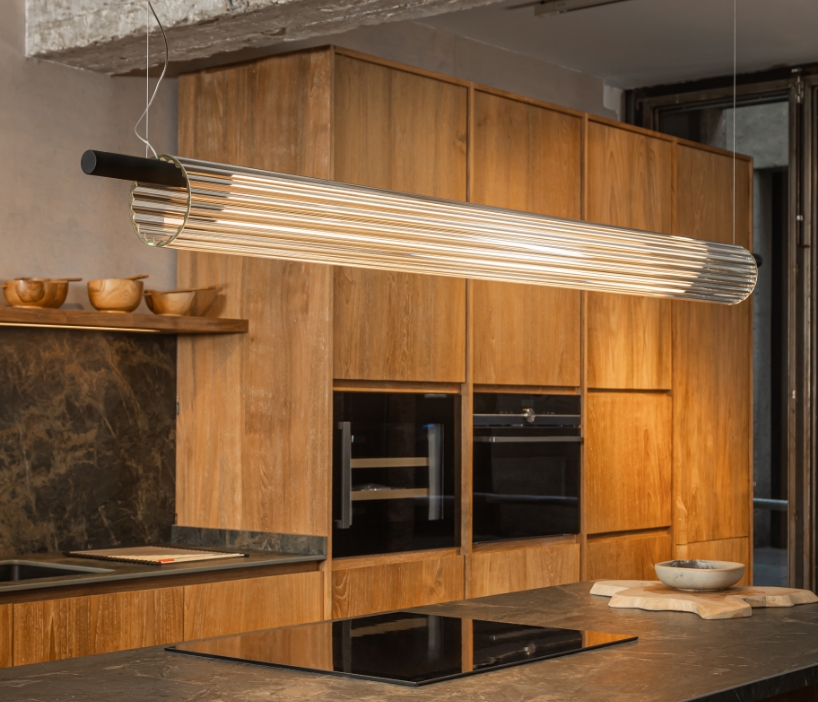
The Glass lamp introduces a more classic decorative element, but reinterpreted from a contemporary perspective. It is the “jewel” of the kitchen.
- Intimate atmosphere: Unlike the technical light of an aluminium profile, the Glass offers a more diffuse and enveloping luminosity. It is the perfect choice to create an intimate atmosphere during a dinner. Its glow is warm, making skin tones look more natural and the environment more welcoming.
- Contrast of cold and warm materials: This luminaire shines (literally) when placed in kitchens that overuse cold materials such as stainless steel or bright white marble. The visual fragility of the glass provides the necessary balance.
- Cascade compositions: A single Glass lamp is elegant, but a composition of several units at different heights above a peninsula creates a dynamic artistic installation. It combines perfectly with Nordic-style kitchens, where light wood and pastel tones need a touch of subtle brilliance, or in dark kitchens where the glass acts as a floating point of light, similar to a firefly in the night.
What is the ideal lighting for a kitchen?
The ideal lighting for a kitchen is based on the principle of light layering. There is no single “perfect light”, but rather a strategic combination of temperatures and sources that respond to the different functions of the space: working with precision and socialising with comfort.
The ideal scheme integrates neutral light (3000K) to guarantee visual hygiene and safety in work areas, combined with warm light (2700K) to generate atmosphere in dining or passage areas. The key to success lies in versatility: having independent circuits that make it possible to transform the kitchen from a culinary laboratory into a relaxation space.
1. Recommended colour temperatures
Controlling the Kelvin (K) temperature is vital to define the character of each area:
- Neutral light (3000K): The working light. It is the technical standard for handling food. By resembling natural morning light, it offers a faithful and crisp colour rendering. It is essential in cutting, cooking and washing areas, as it stimulates concentration and avoids visual fatigue.
- Warm light (2700K): The social light. It is responsible for providing the “home” note. Its orange spectrum relaxes the eyes and softens features. It is mandatory in the dining area, above the breakfast bar or in general lighting if the kitchen is open to the living room, to maintain aesthetic continuity with the rest of the home.
- Cool light (over 4000K): Restricted use. In contemporary residential design, its widespread use is discouraged, as it creates sterile environments (hospital effect). It is reserved only for pantry interiors or very technical areas where extreme contrast is required.
2. Distribution by zones (Layering)
To achieve functional and aesthetic lighting, we must address three levels:
- General Lighting (Ceiling): It must be uniform and without hard shadows. It is achieved by recessed spotlights (downlights) with a wide beam angle or linear systems. The ideal is to seek a balance (3000K or 4000K depending on preference) that serves as a base for the whole space.
- Task Lighting (Work Plane): It is the functional light par excellence. It is resolved by high-density LED strips hidden under the wall units or orientable spotlights. The goal is to project direct light onto the countertop to eliminate the shadows that our own body casts when cooking. Here neutral light is queen.
- Accent and Decorative Lighting: This is where design comes in (such as Insolit models). Pendant lamps above the island or LED strips in display cabinets and plinths. This layer provides depth, style and warmth.
3. CRI and dimming
Beyond the light tone, an expert will always prioritise two technical factors:
- CRI (Colour Rendering Index) >90: Fundamental in the kitchen so that food looks fresh and appetising (so that the red of the tomato is a vibrant red and not a dull maroon).
- Dimmable systems: The ability to regulate the intensity is what turns good lighting into excellent lighting, making it possible to lower the intensity of the general light for an intimate dinner without losing visibility in the work areas.
Frequently asked questions about designer kitchen pendant lights
What colour temperature is best for kitchen pendant lights?
For the kitchen, a neutral light around 3000-4000 K is recommended: it offers good colour fidelity for cooking and handling food while maintaining a pleasant feel. Integrated dining areas can be resolved with a slightly warmer light.
How many pendant lights does a kitchen need?
It depends on the length of the area to be lit. Above an island or bar, the usual approach is to distribute two or three equidistant pendants, or a single linear piece covering the entire length. The important thing is to achieve uniform lighting.
Where to place pendant lights in the kitchen?
The most common locations are above the island, the bar or the peninsula, and above the dining table if it is integrated into the kitchen. The aim is to illuminate the work and use surfaces without generating glare.
Find the ideal piece for your kitchen in the pendant lamps collection by Insolit.