 Skip to content

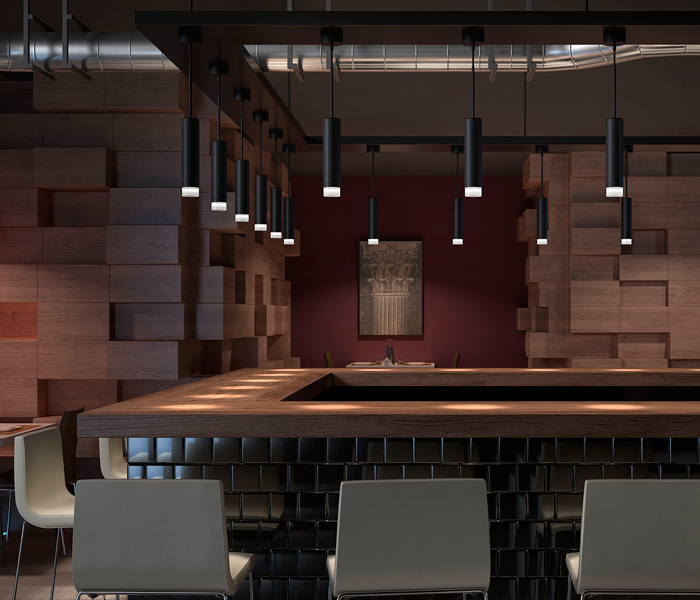
Kitchen island lighting and breakfast bar lighting is one of the most specific —and most rewarding— challenges of interior design. Unlike the general lighting of the kitchen, here the light has a very defined objective: to resolve an elongated surface that works at the same time as a work area, an informal dining area and a meeting point. Achieving the balance between function and atmosphere requires precise decisions about height, the number of luminaires and the type of light. In this guide we review how to light a bar or island with criteria.
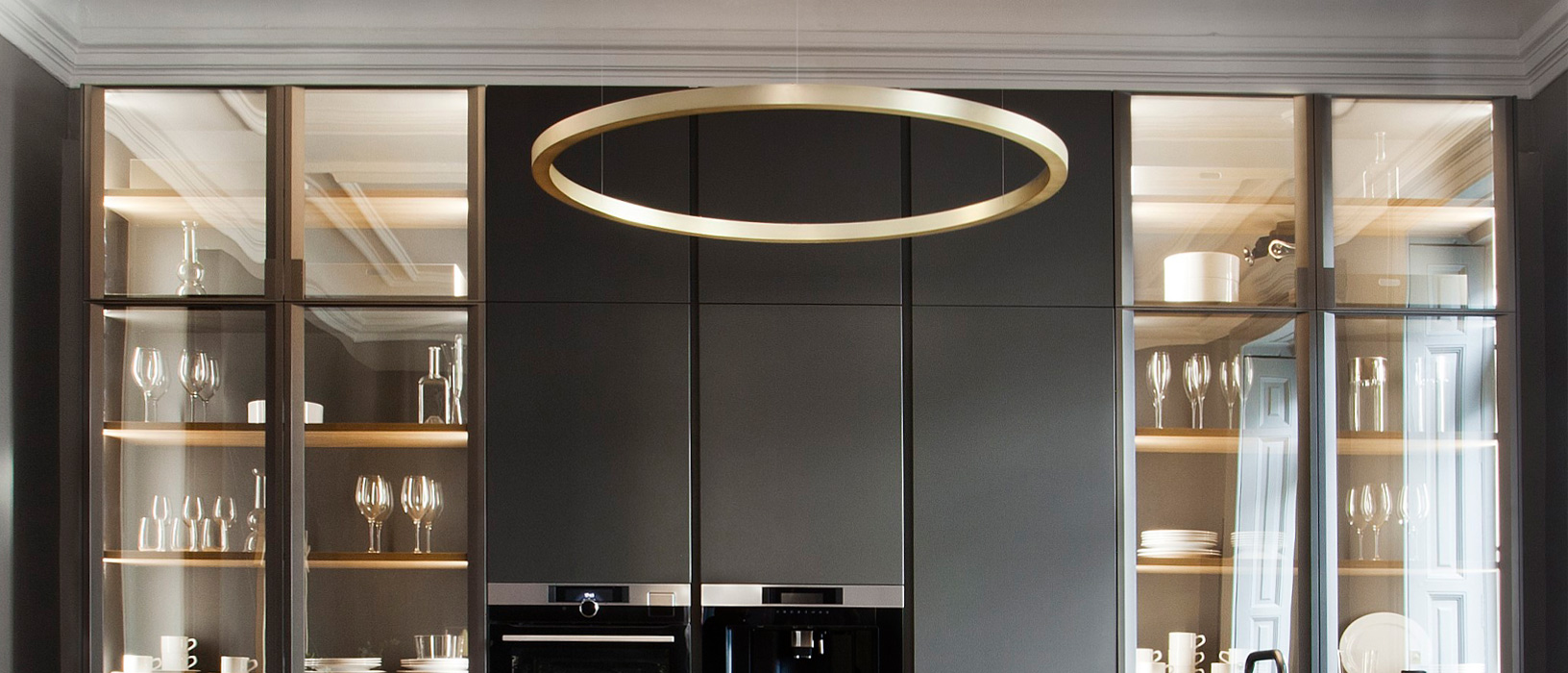
Why the bar and the island require their own lighting
The breakfast bar and the island have become the heart of the contemporary kitchen: a point where people cook, have breakfast, work and socialise. This multiplicity of uses is precisely what makes their lighting impossible to resolve with the general light of the room.
A bar or island needs its own light, descending and well directed, that illuminates the work surface without generating shadows and that, at the same time, visually defines the area as a space with identity within the kitchen. The pendant lamp is, due to its geometry and position, the natural solution for this task.
Height: the key to lighting a bar
The height at which the lamps are hung above a bar or island is the most decisive decision. If they are too high, they lose effectiveness and the light disperses; if they are too low, they dazzle and obstruct the view.
The usual reference is to leave the lower edge of the lamp about 70-80 cm from the surface of the bar or island. This distance correctly illuminates the work plane and makes it possible to maintain eye contact between those on both sides. On high ceilings it can be raised slightly, always keeping the proportion.
How many lamps to hang above a bar or island
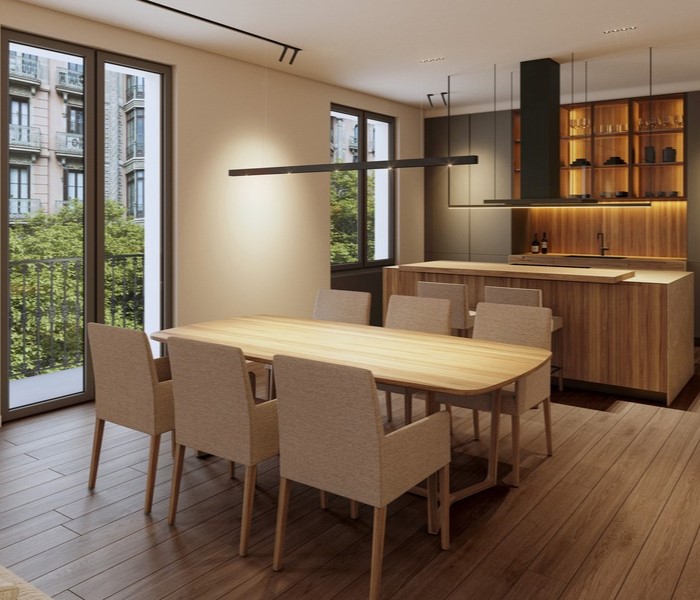
The number of luminaires depends on the length of the bar and the type of piece chosen. There are two main approaches:
- Several individual pendant lamps: they are distributed equidistantly along the bar. As a general criterion, two pendants are placed on bars of up to 1.5-2 m and three on longer bars, keeping the ends balanced.
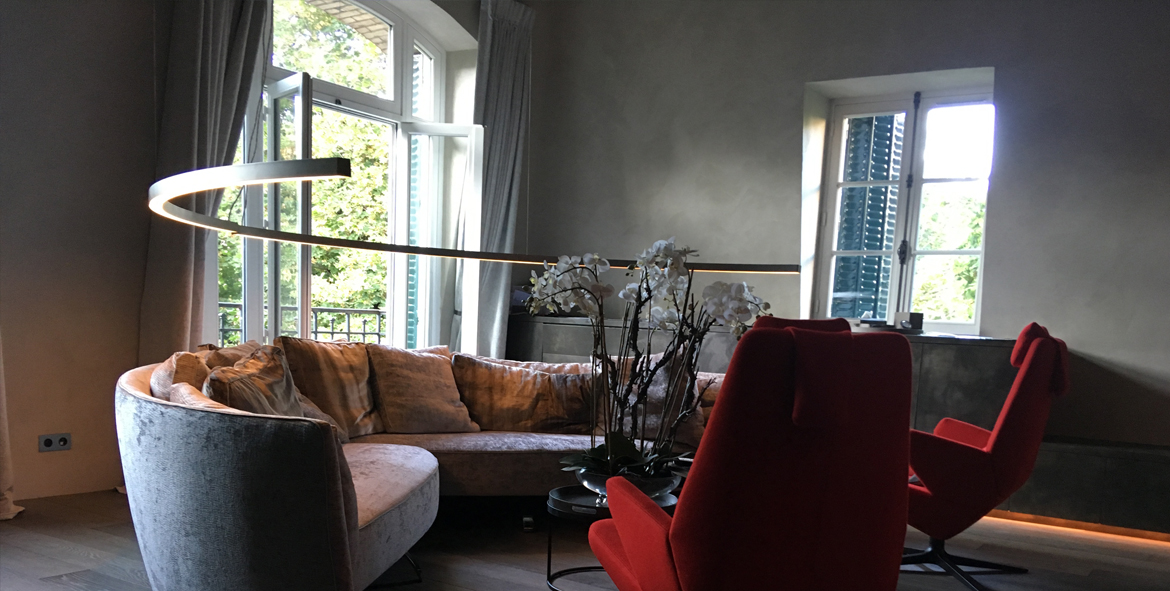
- A single linear lamp: an elongated piece that covers the entire length of the bar with continuous, uniform light. It is the visually cleanest option and the one that best resolves long islands and bars.
In both cases, the key is to achieve uniform lighting across the entire surface, without areas of dimness or concentrations of light.
Types of pendant lamp for a breakfast bar and island
The Insolit collection offers several solutions particularly suited to lighting bars and islands:
The TR Line & Up is a linear pendant lamp that resolves the entire length of a bar or island with a single piece, providing direct light on the surface and indirect light towards the ceiling. The Focus Line Pendant is a focal pendant that makes it possible to compose rhythms of several units with precise, directional light. And the Glass, with its artisanal glass diffuser, provides a soft light and a sculptural presence when a warmer, more decorative accent is sought.
Colour temperature and intensity for the kitchen bar
As it is a work area, the bar requires a light with good colour fidelity. A neutral colour temperature, around 3000-4000 K, is recommended, allowing food to be handled comfortably without sacrificing a pleasant feel.
Since the bar is also used for eating or gathering, the most versatile option is to incorporate intensity regulation: a powerful light for cooking and a dimmer light for after-meal moments. A Colour Rendering Index (CRI) above 90 guarantees that the colours of food and materials are perceived faithfully.
How to integrate the bar into the kitchen’s overall scheme
The lighting of the bar or island should not be thought of in isolation, but as one more layer within the kitchen’s overall lighting scheme. A well-lit kitchen combines three levels that must dialogue with each other.
General lighting —usually resolved with recessed downlights or a ceiling light— provides the base level of light that allows people to move and work safely. Task lighting covers the work surfaces, including the countertop and the bar itself. And accent lighting highlights specific elements, such as a display cabinet, a shelf or a feature wall covering.
The bar’s pendant lamps belong to the task layer, but due to their visible position they also fulfil a decorative function: they are the element that articulates the composition and draws the eye. That is why it is advisable for them to dialogue aesthetically with the rest of the project —in finish, proportion and formal language— and for their control to be independent of the general light, so that the bar can be lit on its own when used as a breakfast or informal meeting area.
Thinking of the bar within this layered scheme guarantees a flexible kitchen, capable of adapting both to the most demanding tasks and to the most relaxed moments of the day.
Common mistakes when lighting a bar or island
- Hanging the lamps too high: the light disperses and loses effectiveness over the work plane.
- Distributing the luminaires poorly: leaving the ends of the bar uncovered creates impractical areas of dimness.
- Choosing a light that is too warm: it hinders kitchen tasks and reduces the sharpness of the work area.
- Doing without dimming: without attenuation, the bar cannot adapt to its different uses throughout the day.
- Ignoring proportion: lamps that are too small for a large island look dull; too large, and they saturate the space.
Frequently asked questions about breakfast bar lighting
At what height should lamps be placed above a breakfast bar?
The usual reference is to leave the lower edge of the lamp about 70-80 cm from the surface of the bar. This height lights the work plane well and makes it possible to maintain eye contact between people on both sides.
How many pendant lamps to put above a kitchen island?
It depends on the length. On bars of up to 1.5-2 m, two equidistant pendants are usually placed, and three on longer bars. As an alternative, a single linear lamp covers the entire surface with continuous, uniform light.
What colour temperature is best for lighting a kitchen bar?
A neutral light of 3000-4000 K is recommended, offering good colour fidelity for kitchen tasks. Incorporating intensity regulation also makes it possible to adapt the bar to more relaxed uses, such as having breakfast or gathering.
Conclusion
Lighting a breakfast bar or a kitchen island with criteria means getting the height, the number of luminaires and the type of light right. A well-resolved solution turns the bar into the true heart of the kitchen. Discover the ideal pieces for this challenge in the pendant lamps collection by Insolit.