 Skip to content

Bathroom lighting is one of the most underrated aspects of interior design and, at the same time, one of those that most shapes the daily experience of whoever uses it. A well-lit bathroom doesn’t just make personal-care tasks easier — it transforms a functional room into a space of wellbeing. Achieving this requires combining technical criteria — electrical safety, colour temperature, colour rendering — with aesthetic decisions that give the space character. In this guide we go over everything to consider when lighting a bathroom with intent.
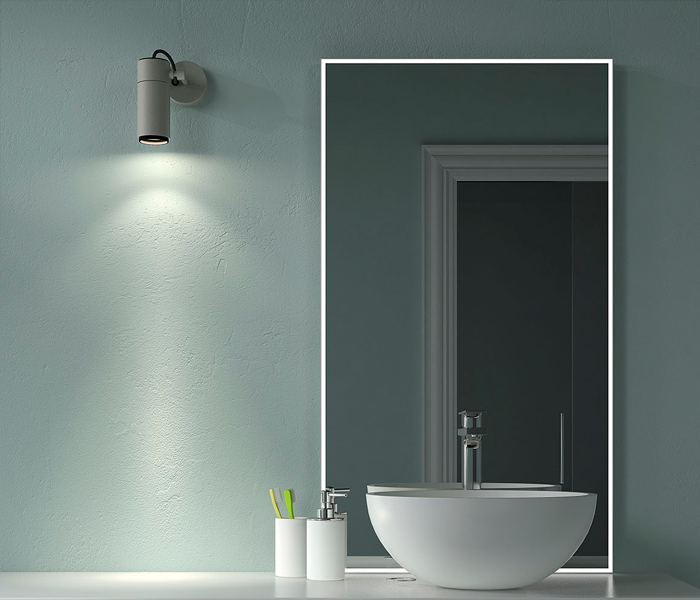
Why bathroom lighting requires a specific approach
The bathroom is, technically speaking, the most demanding space in the home when it comes to lighting. It combines three constraints that rarely come together in other rooms: the presence of water, which requires compliance with electrical safety regulations; the need for precise light for personal-care tasks; and a usually small floor area with highly reflective materials — mirrors, ceramic, marble — that amplify the effect of any light source.
This means a bathroom can’t be approached with the same criteria as a living room. Every decision — type of fixture, location, temperature — has direct consequences on both safety and the quality of the daily experience.
The four types of light a bathroom needs
A well-resolved lighting scheme combines several layers of light, each with a distinct function:
- General lighting: the main light that illuminates the whole space evenly. It is usually resolved with ceiling fixtures, recessed downlights or surface-mounted luminaires.
- Task lighting: precise, shadow-free light aimed at the areas where personal-care activities take place, above all the mirror. It is the most critical layer in a bathroom.
- Accent lighting: highlights specific elements — a niche, a shelf, an architectural detail — and brings visual depth.
- Ambient lighting: soft, indirect light that creates atmosphere and enables relaxed uses of the bathroom, such as a night-time bath with low light.
The key is not to pick one of them but to combine them and, ideally, to be able to control them independently.
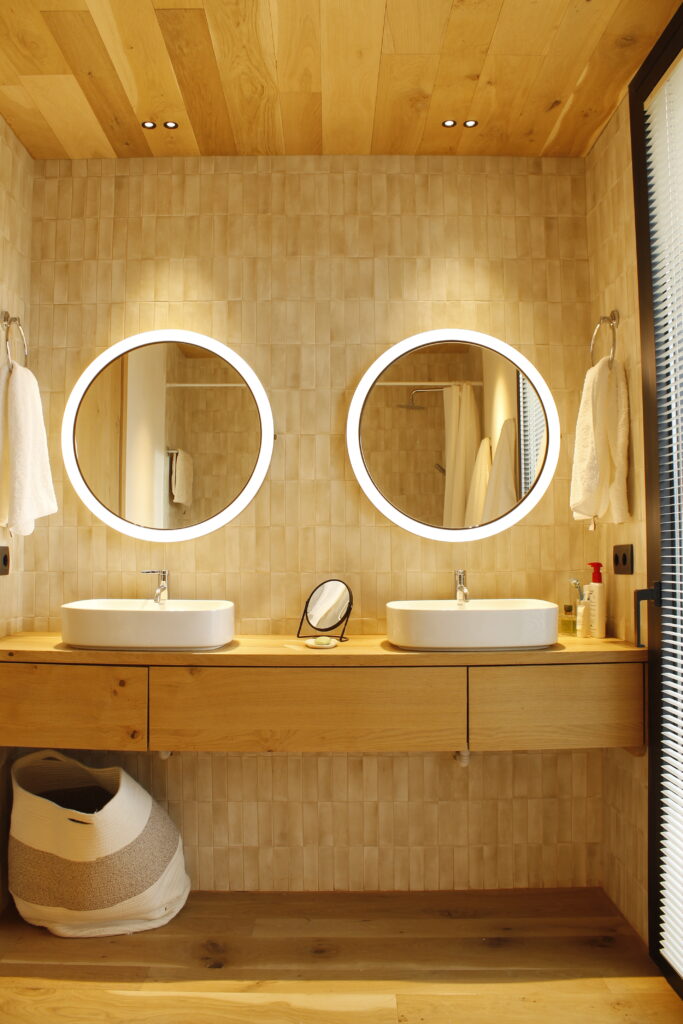
Colour temperature: which Kelvin to choose
Colour temperature, measured in Kelvin (K), determines whether the light is perceived as warm or cool and has a direct impact on how the bathroom works:
- Neutral light (4000 K): the general recommendation for the mirror area. It reproduces colours faithfully and is ideal for shaving or putting on make-up.
- Warm light (2700–3000 K): brings a welcoming, relaxing atmosphere, perfect for ambient lighting.
The most versatile solution is to combine both or to install fixtures with adjustable colour temperature (tunable CCT), so the bathroom can shift from a functional mode to a relaxed one depending on the time of day.
Safety first: IP protection by zone
Electrical regulations divide the bathroom into zones according to their proximity to water, and each one demands a minimum IP protection rating:
- Zone 0 (inside the shower or bathtub): IP67 and extra-low voltage supply.
- Zone 1 (above the shower or bathtub up to 2.25 m): minimum IP44, IP65 recommended.
- Zone 2 (60 cm around zone 1): minimum IP44.
- Outside the zones: IP20 is acceptable, although many professionals prefer IP44 throughout the room.
Respecting these ratings is not optional: it is the basis of any responsible lighting project. Fixtures such as the Focus Line IP 44 by Insolit are conceived precisely to resolve these zones with full guarantees.
Where to place each light point
The placement of fixtures is just as important as the choice of them:
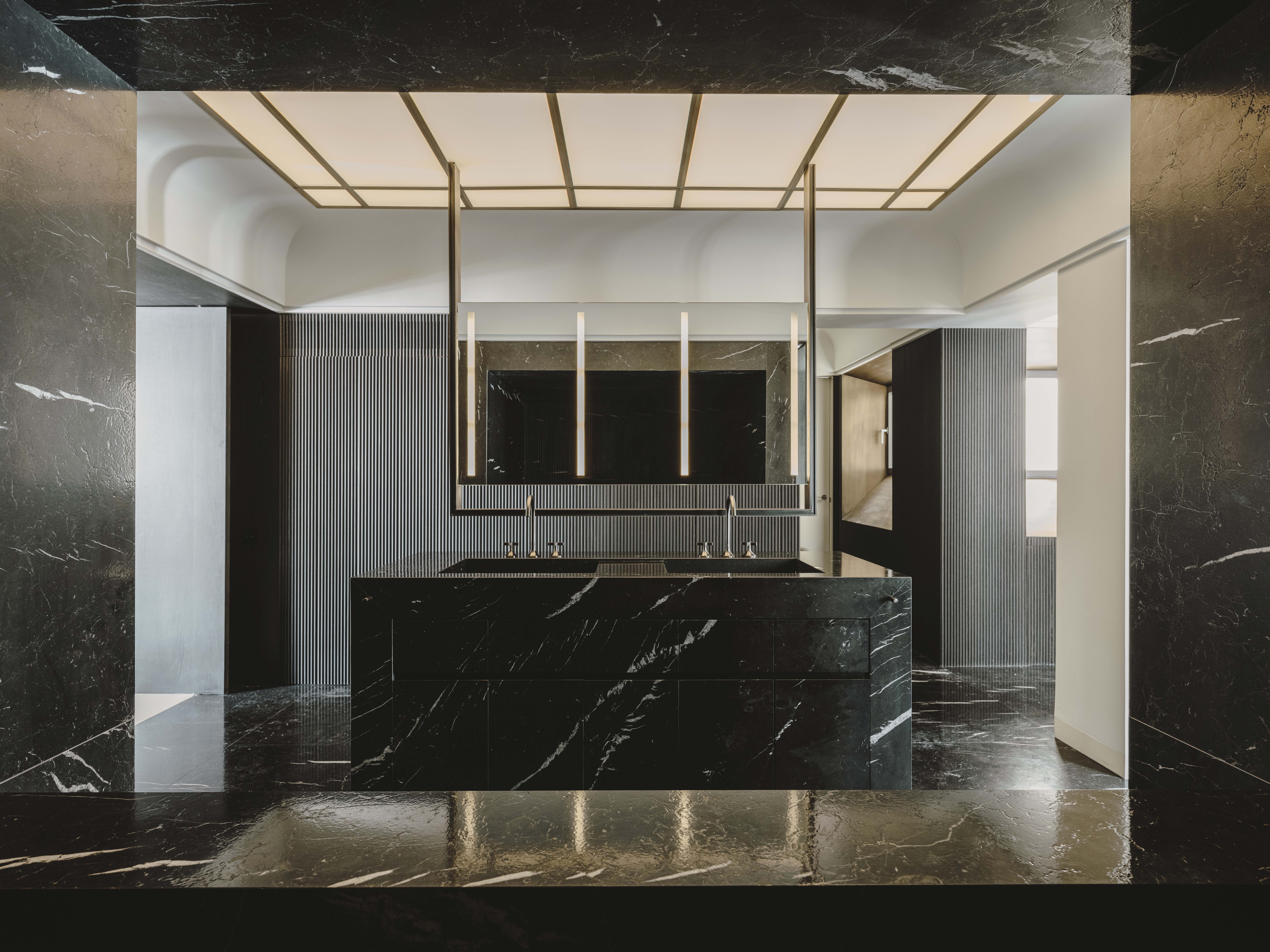
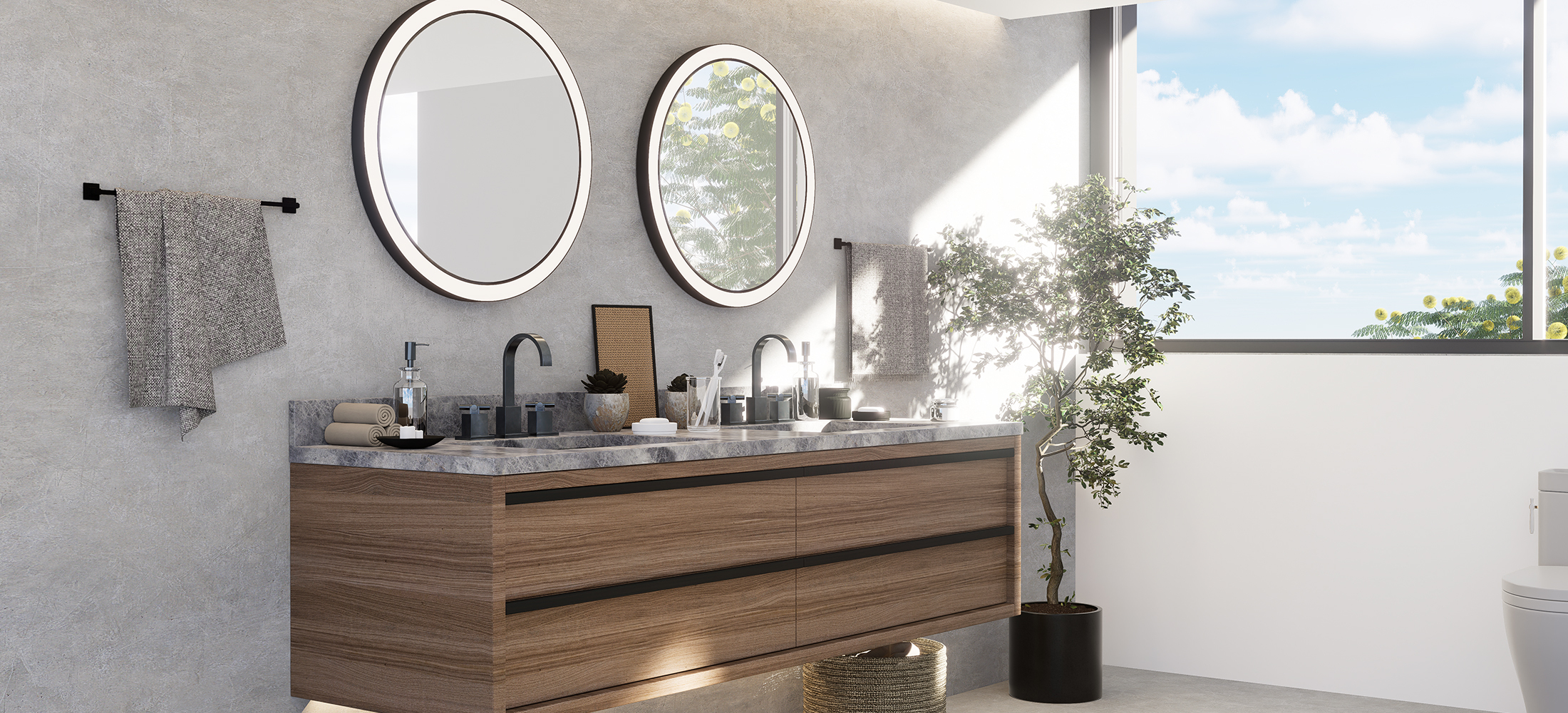
- At the mirror, the ideal is to light from the sides, on both flanks, to avoid the harsh shadows created by an overhead light on the face.
- General lighting should be distributed evenly, avoiding leaving corners in shadow.
- Accent light can highlight the texture of a finish or mark the path towards the shower.
- Ambient lighting works very well integrated into furniture, under the sink or in niches, creating an indirect glow.
Insolit solutions for lighting the bathroom
The Insolit collection includes several pieces especially suited to the bathroom. The Stick Hole is a recessed projector that delivers precise light with complete architectural integration. The Stick Track brings track-based flexibility to direct light to different points. The TR Moon works as a general-light piece with a clean circular geometry. And the Focus Line IP 44, an adjustable projector with IP44 certification, resolves wet zones without giving up on design.
Common mistakes in bathroom lighting
Even in carefully thought-out projects some recurring mistakes are worth avoiding from the design phase:
- Lighting the mirror only from above: an overhead light creates harsh shadows under the eyes, nose and chin. The solution is side or frontal light at face height.
- Relying on a single light source: trusting general lighting alone leaves the bathroom flat and nuance-free. Layers of light are essential for a professional result.
- Choosing the wrong colour temperature: light that is too cool feels clinical; light that is too warm makes personal-care tasks harder. The balance lies in neutral light for tasks and warm light for atmosphere.
- Ignoring the colour rendering index (CRI): a low CRI distorts how skin and material colours are perceived. It is worth demanding LED sources with a CRI above 90.
- Underestimating IP protection: installing a fixture without the right IP rating for its zone is a real electrical risk and a breach of regulations.
Anticipating these mistakes at the project phase prevents costly fixes once the installation is in place and guarantees a comfortable, safe and visually coherent bathroom.
Frequently asked questions about bathroom lighting
What colour temperature is best for the bathroom?
For the mirror area, neutral light of around 4000 K is recommended, since it reproduces colours faithfully. For ambient lighting, a warm light of 2700–3000 K is more welcoming. The ideal is to combine both or use fixtures with adjustable colour temperature.
What IP protection rating does a bathroom lamp need?
It depends on the zone. The inside of the shower requires IP67; the area immediately above the shower or bathtub, at least IP44 (IP65 recommended); and the rest of the room, IP44 as a recommended safety criterion.
How many light points does a bathroom need?
There is no fixed number: it depends on size and layout. As a minimum, a bathroom should have a layer of general lighting and a task layer at the mirror. In larger bathrooms it pays to add accent and ambient light to enrich the scheme.
Conclusion
Lighting a bathroom with intent means balancing safety, functionality and atmosphere within a single project. Combining layers of light, choosing the right colour temperature and respecting IP regulations are the pillars of a professional result. If you are looking for fixtures designed and made to meet these demands, discover the Insolit bathroom lamps collection.