 Skip to content

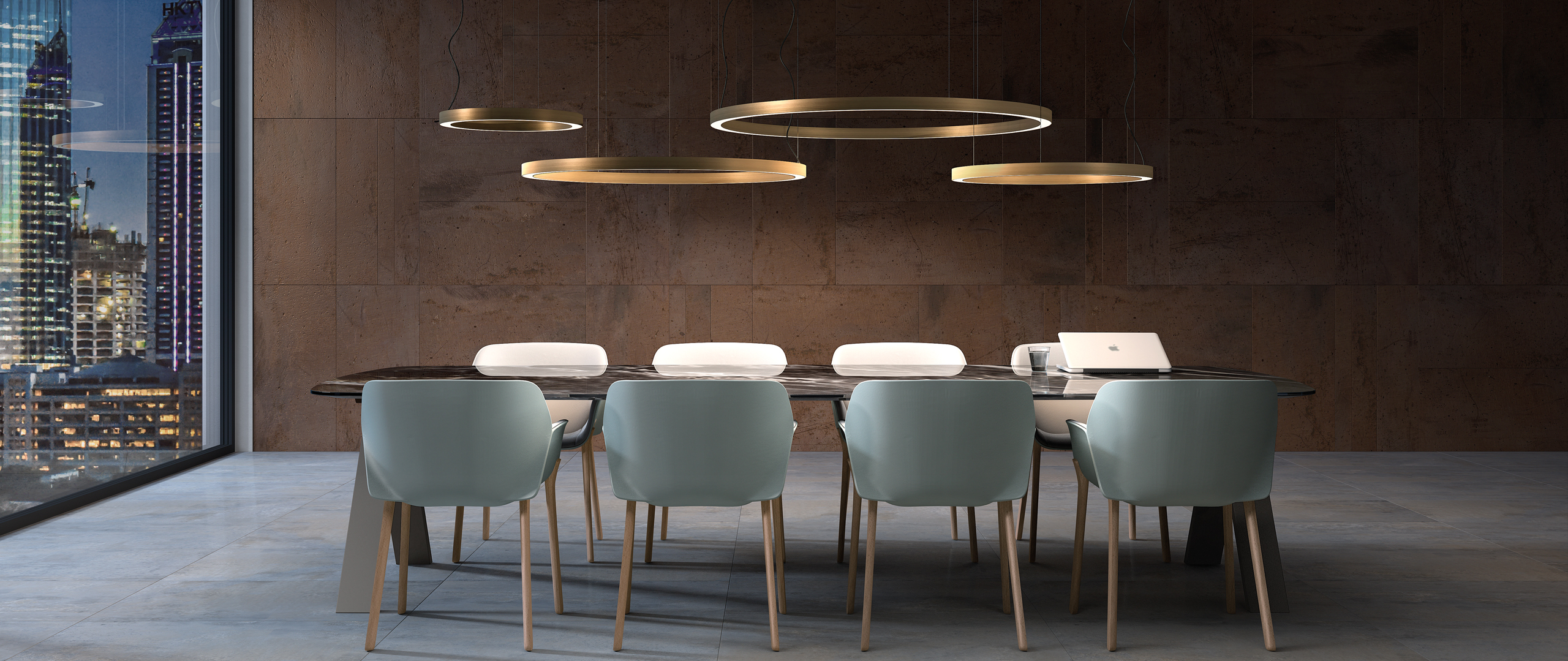
Why the ceiling lamp shapes the whole project
In most rooms, ceiling lamps are the main light source — the one that sets how much general light a space has before adding any other point. Choosing well between the different types of flush mounts, recessed lights or pendant ceiling lights isn’t just an aesthetic decision: it directly affects how spacious a room feels, visual comfort and the home’s electricity consumption.
In this guide we go through the main types of ceiling lamps on the market, what to check before buying one, and how to choose the right model based on wattage and available space — with real examples from Insolit’s catalogue.
Types of ceiling lamps and flush mounts
LED flush mount ceiling lights
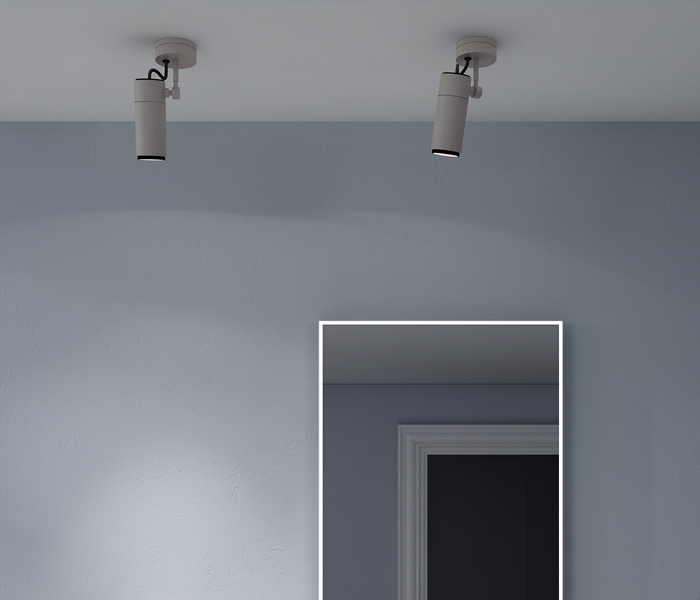
The LED flush mount is the most common solution for general lighting: it sits flush against the ceiling, barely taking up height, and spreads light evenly across the whole room. It’s the most versatile option for bedrooms, hallways or kitchens where even light without harsh shadows is needed.
One example within this group is Focus-Line IP-44, a minimalist flush mount also suitable for humid areas such as bathrooms.
Recessed ceiling lights
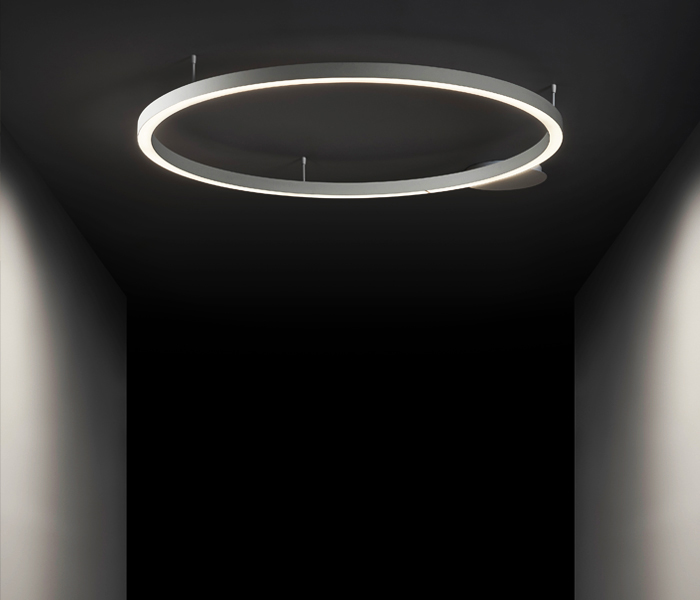
Recessed lights are built into the ceiling itself, leaving a clean surface with no added volume — ideal for low ceilings or very pared-back aesthetics.
TR-Ceiling Up casts indirect light upward for an enveloping effect, while TR-Ceiling Down offers direct downward light, more functional for work areas or reading. Both share the same circular design, so they can be combined within the same project.
Pendant ceiling lights
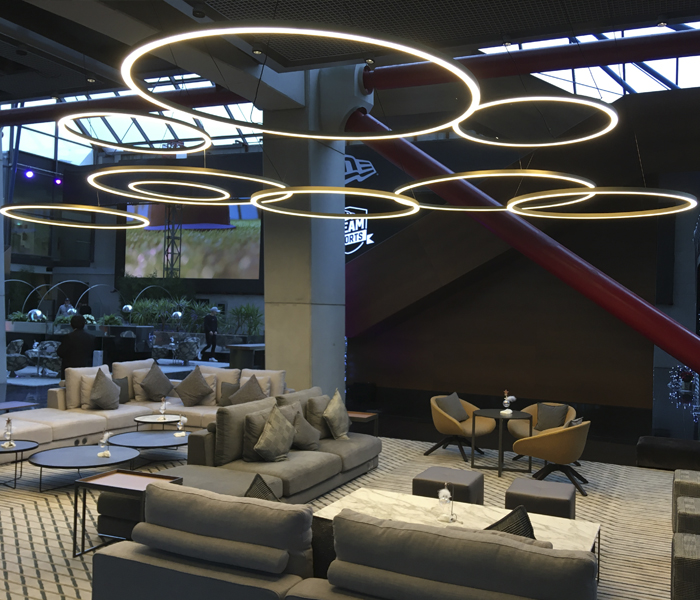
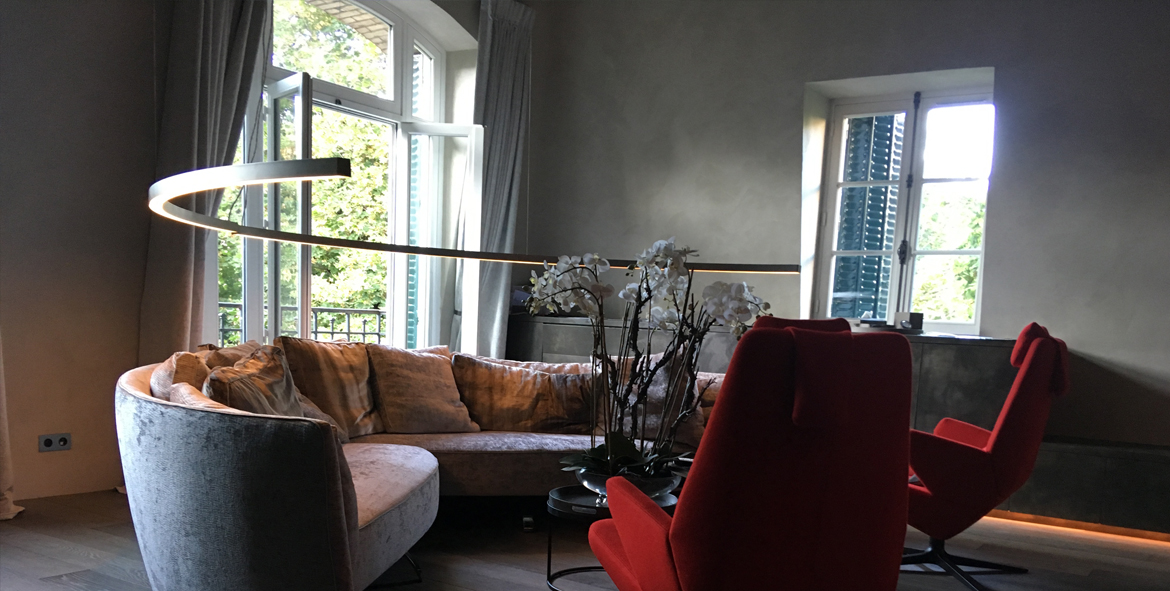
Pendant ceiling lights hang down from the ceiling to a set height and act as a focal point of the room, on top of providing light. They’re the option with the most visual presence of the three.
TR-Huge is a large-format circular pendant designed for spacious areas — dining rooms, receptions or living rooms with high ceilings — where a single piece can replace several light points.
What to check before buying a ceiling lamp
- Wattage and lumens: the larger the room, the more total lumens are needed — not just more watts.
- Colour temperature: warm (2700-3000K) for living and resting areas; neutral (3500-4000K) for kitchens and work spaces.
- Ceiling height: pendants need enough clearance; on low ceilings, a flush mount or recessed light is safer.
- Dimmability: being able to lower the intensity extends the uses of the same lamp throughout the day.
- Finish and material: on flush mounts and recessed lights, the frame (white, black, brass…) stays visible and should match the rest of the decor.
How to choose by wattage and space
As a general reference: a standard living room or bedroom needs between 1,500 and 3,000 total lumens of general light; a kitchen needs somewhat more (3,000-4,000) as a task area. In rooms with ceilings above 2.7m, a pendant like TR-Huge gains proportion; below that height, TR-Ceiling recessed lights or a flush mount like Focus-Line IP-44 keep the ceiling from feeling lower than it is.
Track systems: Stick Track System 48v
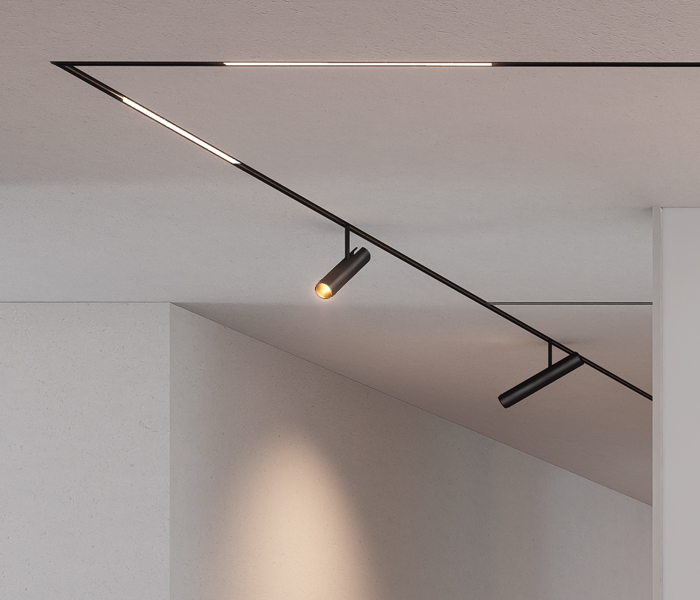
Beyond flush mounts, recessed lights and pendants, there’s a fourth category built for projects that need flexibility: track systems. Insolit’s Stick Track System 48v combines adjustable spotlights (Stick Track) with continuous light lines (Line 48v, available in 70, 120 and 170cm) on the same low-voltage track, with an adapter for the universal Stucchi track.
Unlike a fixed flush mount, this system lets you combine focused and general light in a single installation, and reposition the spotlights later on — widely used in kitchens, offices and work areas where lighting needs change over time. Designed by Josep Lluís Xuclà, it’s available in white or black finish, with a colour temperature of 2700K or 3000K, and ON-OFF or DALI control.
You can see all the configurations on the Stick Track System 48v product page.
Frequently asked questions
As a reference, between 1,500 and 3,000 total lumens for a standard bedroom or living room, and 3,000-4,000 for kitchens or other work areas.
It depends on ceiling height and the effect you’re after: the flush mount is the most versatile and straightforward option, recessed lighting keeps the ceiling clean in low-ceiling spaces, and a pendant adds visual presence in rooms with high ceilings.
A flush mount offers a fixed, uniform light point. A track system, like Stick Track System 48v, lets you combine several adjustable spotlights and continuous light lines on the same track, and reconfigure them later — ideal when how the space is used may change.
Yes, it’s actually common: flush mounts or recessed lights for hallways and bedrooms, and a pendant as the centrepiece in the living or dining room.