 Skip to content

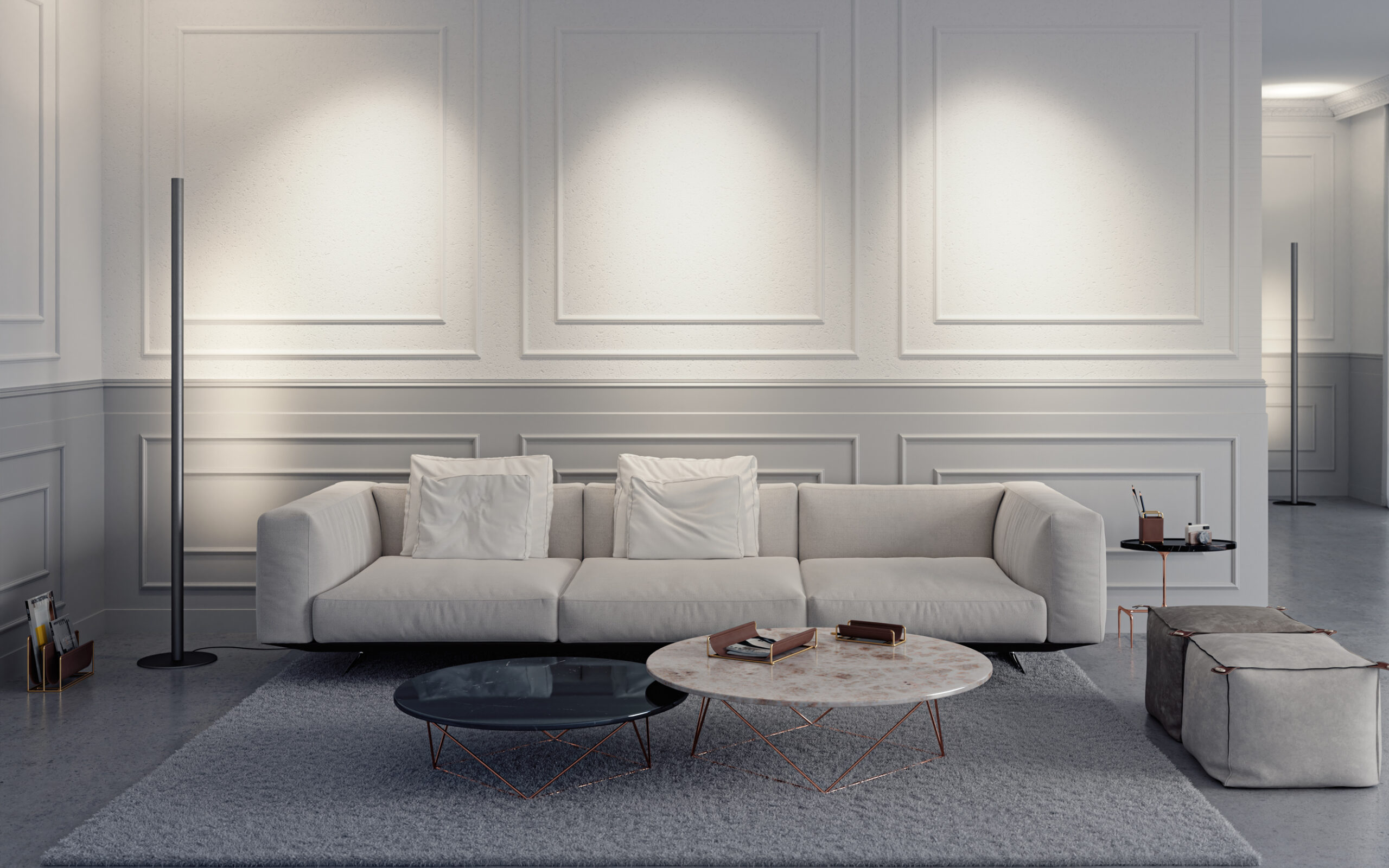
In contemporary interior architecture, light has evolved from a merely functional resource into a design material as decisive as stone, wood or glass. Within this evolution, the indirect light floor lamp occupies a unique place: it is the luminaire that transforms a space without imposing itself visually, the piece that works quietly to build enveloping, comfortable atmospheres. In our floor lamp collection, designed and manufactured in Barcelona, this philosophy takes shape in luminaires that understand light as a mouldable material at the service of the project.
What Is an Indirect Light Floor Lamp and Why Does It Transform Spaces
An indirect light floor lamp is one that projects its luminous flux towards intermediate surfaces—walls, ceilings, vertical planes—rather than directing it onto the activity area. The result is diffused illumination, free of glare and harsh shadows, that wraps the space in homogeneous warmth. This principle, known in professional lighting design as reflected illumination, represents one of the most effective strategies for generating visual comfort without sacrificing the required light intensity.
For architects and interior designers, the advantage is twofold. On the one hand, indirect light reveals the textures and finishes of architectural surfaces—an exposed concrete wall, a timber cladding, a vaulted ceiling—without flattening them under a frontal beam. On the other, the luminaire itself becomes a sculptural object that adds character to the space without overwhelming it, functioning as a design piece even when switched off.
LP by Insòlit: The Benchmark Indirect Light Floor Lamp
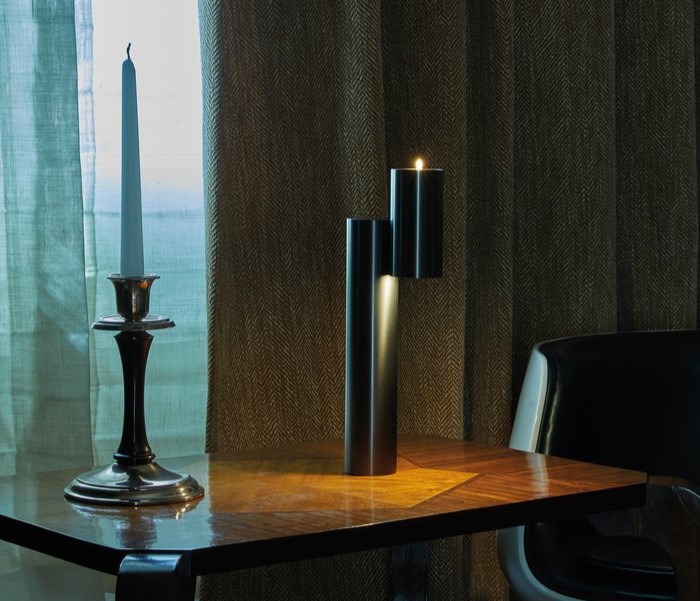
If there is a luminaire that embodies this philosophy of light as silent material, it is the LP, designed by Josep Lluís Xuclà for Insòlit. Crafted from laser-cut aluminium tube, the LP is an exercise in essentialism: a vertical line rising from the floor to project two independent indirect light streams—one ambient towards the wall and one focal towards the ceiling—creating a dual luminous layer that enriches the perception of architectural volume.
Dual Lighting System With Independent Control
What sets the LP apart is its two integrated potentiometers, allowing the user to independently adjust each light source. This is not a technological whim; it responds to the specifier’s real need to offer flexible lighting solutions adaptable to different usage scenarios—from focused reading to the enveloping ambiance of a hotel lobby. With a 25 W LED module delivering 2,500 lm per channel, the LP provides substantial luminous flux, always with the softness that defines indirect illumination.
Material Minimalism, Maximum Luminous Expression
The LP is available in five finishes—white, black, gold, bronze and graphite—designed to integrate into demanding colour palettes. Its 2,700 K colour temperature reinforces the ambient vocation of this indirect light floor lamp, placing it within the warm tonality range that fosters a sense of cosiness in residential spaces, boutique hotels and relaxation areas.
How to Integrate an Indirect Light Floor Lamp Into Interior Design Projects
The versatility of an indirect light floor lamp lies in its ability to operate as a complementary layer within a stratified lighting scheme. It does not replace general illumination nor compete with it—it enriches it. Below, three scenarios where this typology adds differential value to the project.
Residential Spaces: The Living Room as a Comfort Stage
In the contemporary living room, the trend is to abandon a single overhead light point in favour of multiple luminous layers modulated according to the time of day. An indirect light floor lamp like the LP, placed beside a textured wall or in the corner of a seating area, projects an upward light wash that visually extends the ceiling height and softens transitions between zones. The result is an environment that invites lingering, far removed from the rigidity of conventional lighting schemes.
Hospitality and Contract: Atmospheres That Define the Experience
In contract projects—hotels, restaurants, co-working spaces—indirect light plays a central role in constructing ambient identity. The LP, with its dual adjustable channel, enables differentiated lighting scenes within the same space without resorting to complex home-automation systems. The specifier can define a cosy evening scene and a livelier daytime one simply by adjusting the luminaire’s two potentiometers.
Offices and Workspaces: Visual Comfort Without Fatigue
Visual ergonomics is a critical factor in work environments. Direct lighting on screens generates reflections and eye strain, while an indirect light floor lamp solves this problem by providing uniform ambient illumination that reduces contrast between the screen and its surroundings. In executive offices and meeting rooms, the LP also contributes an aesthetic presence that elevates the perceived quality of the space.
Beyond the LP: Other Insòlit Floor Lamps With Indirect Light
The indirect light philosophy runs through our entire floor luminaire collection. Two pieces complement the LP’s universe from different perspectives.
Glass Floor: Light as a Floating Element
The Glass Floor, also designed by Josep Lluís Xuclà, introduces ribbed glass as a natural light diffuser. Its glass tube creates a suspended luminosity effect that dresses the space with subtle, enveloping elegance. Built with a steel tube body and a 24 W, 1,980 lm LED module on an Insòlit-designed PCB, the Glass Floor is dimmable via a foot dimmer and fully customisable—an indirect light floor lamp that transforms luminous presence into an almost material experience.
Focus Line Floor IP 65: Indirect Light for the Night Landscape
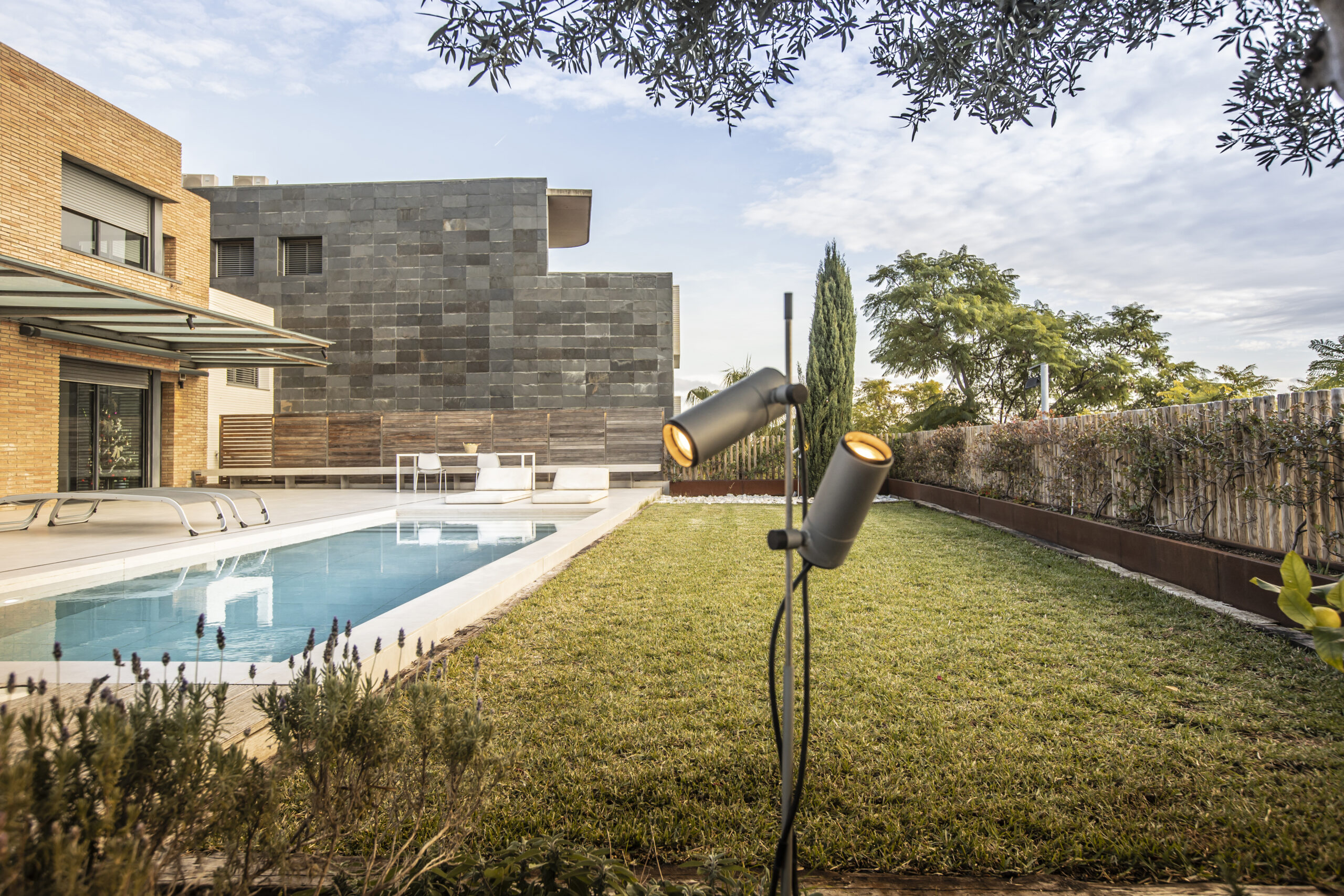
When the project extends beyond interior boundaries, the Focus Line Floor IP 65, designed by Jean-Michel Wilmotte, offers an outdoor floor lighting solution with IP 65 protection rating. Its machined aluminium body with matte black anodised front ring and AISI 316 stainless steel support ensures weather resistance. Available in single or double configuration with a GU10 LED source, this floor projector sculpts gardens, terraces and facades with light.
Technical Criteria for Choosing the Right Indirect Light Floor Lamp
Selecting an indirect light floor lamp for a professional project requires evaluating several parameters beyond aesthetics. Luminous flux, colour temperature, dimmability and IP rating determine each luminaire’s suitability for each specific context.
Luminous flux defines the amount of light emitted: the LP’s 2,500 lm per channel places it among luminaires capable of illuminating entire rooms by reflection, while the Glass Floor’s 1,980 lm are ideal for creating localised atmospheric points. A colour temperature of 2,700 K favours the warm, welcoming perception demanded by residential and hospitality projects. And dimmability—whether via integrated potentiometers like the LP or a foot dimmer like the Glass Floor—is essential for the specifier to adjust the lighting scene to each moment of use.
The Indirect Light Floor Lamp as a Project Statement
Choosing an indirect light floor lamp goes far beyond solving a functional need: it is taking an aesthetic stance on how a space should be experienced. It means opting for quiet elegance over excessive prominence, for light that accompanies rather than imposes. At Insòlit, we design and manufacture in Barcelona luminaires that embody this vision—pieces like the LP, the Glass Floor and the Focus Line Floor IP 65 that prove the best lighting is often that which is not seen directly, but felt.