 Skip to content

Some surfaces are waiting for a piece that completes them: an entryway console, a desk by the window, a side table that’s been asking for more than just a book on top for months. A well-chosen table lamp doesn’t just light a space — it signs that corner, giving it a different reason to exist at any hour of the day. Before finding yours, it helps to be clear on what you need it for — reading, setting a mood, decorating — what size suits the piece of furniture that will hold it, and whether you’d rather have a corded version or a cordless table lamp, free to move around the house with you.
In this guide, we go through the types of table lamp out there, what to check before choosing one, and how to get the size and height right — with two real pieces from Insolit’s collection.
Table lamp or desk lamp? Same piece, different names
In English, “table lamp” covers a wide range of freestanding light sources meant to rest on a surface without depending on anything else. What actually changes from one lamp to the next isn’t the name — it’s the function you ask of it, and that’s what should really guide your choice.
Types of table lamp by function
Reading or task table lamp
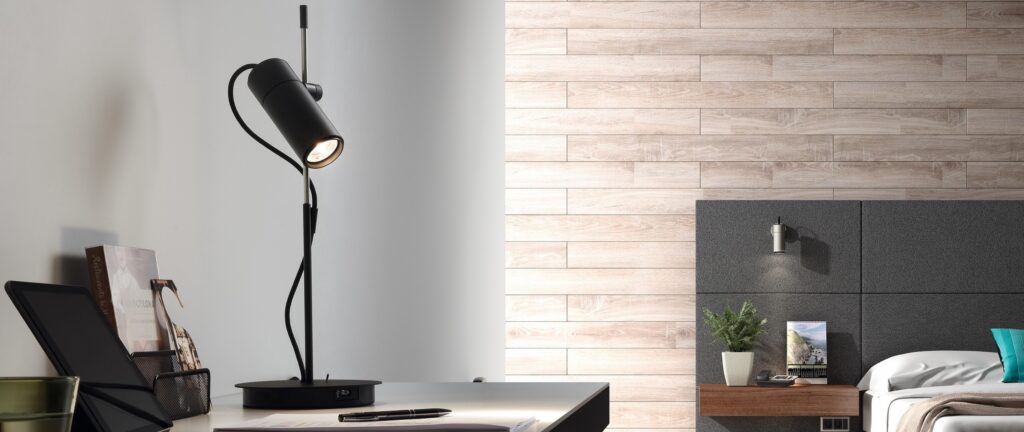
Built to direct light exactly where you need it — a book, a keyboard, a sketchbook. Usually featuring an adjustable arm or directional shade, with a slightly cooler light (3500-4000K) that keeps the mind sharp and the eyes rested.
Ambient table lamp
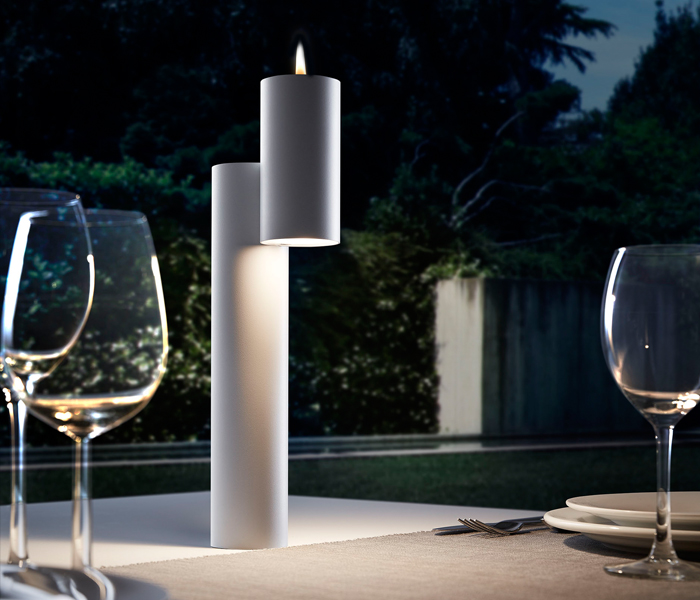
Here the function isn’t solving a task, but creating an atmosphere. A warm point of light (2700-3000K) that turns a nightstand or console into something to look at, not just something to use. The design of the piece itself matters as much as the light it gives off.
Cordless table lamp
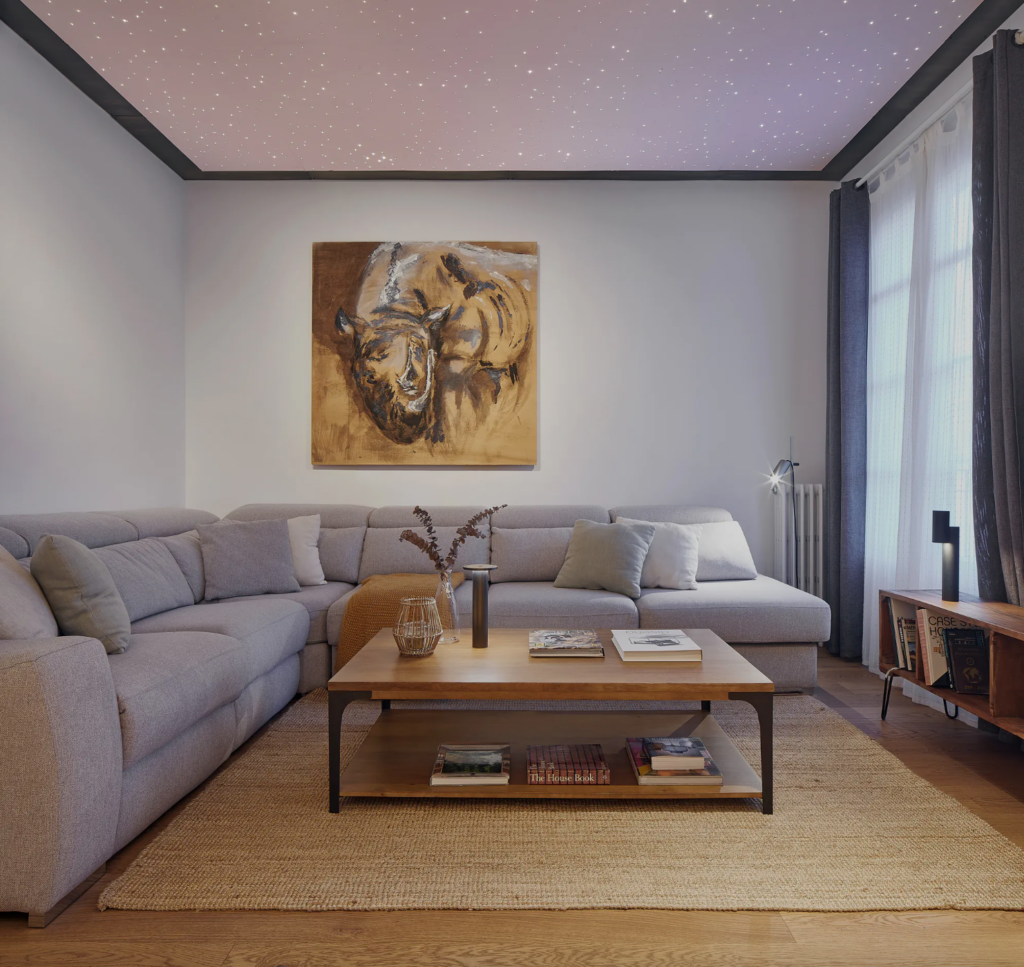
With an integrated rechargeable battery, this is the table lamp that follows you: to the terrace for a summer dinner, to the centre of the table for a long evening with guests, to any surface where a visible cord would break the moment. Several hours of battery life and different intensity levels, with no outlet required.
What to check before choosing your table lamp
- Main function: decide first whether you want it for reading, working, or simply setting a mood — everything else gets easier once this is clear.
- Colour temperature: warm (2700-3000K) for calm and rest; neutral (3500-4000K) if it’s going to support precision tasks.
- Dimmability: a dimmable table lamp lives with you day and night, without needing a second piece for each moment.
- Proportion with the furniture: a lamp that’s too large overwhelms a side table; one that’s too small gets lost on a large desk.
- Material and finish: glass, ceramic, metal or stone — each material decides whether the lamp blends in quietly or becomes the object everyone looks at.
How to get the size and height right
As a reference: next to a sofa, the total height of the lamp should sit roughly at eye level for someone seated — not so low that it dazzles when you look at it, not so high that it loses its reading function. On a nightstand, the base of the shade should sit around shoulder height for someone lying in bed.
As for width, a rule that rarely fails: the shade’s diameter shouldn’t exceed about a third of the width of the furniture it sits on — that way it keeps its presence without taking over the rest of the surface.
Two Insolit pieces for your space
Within Insolit’s collection, two pieces answer different needs within the world of the table lamp:
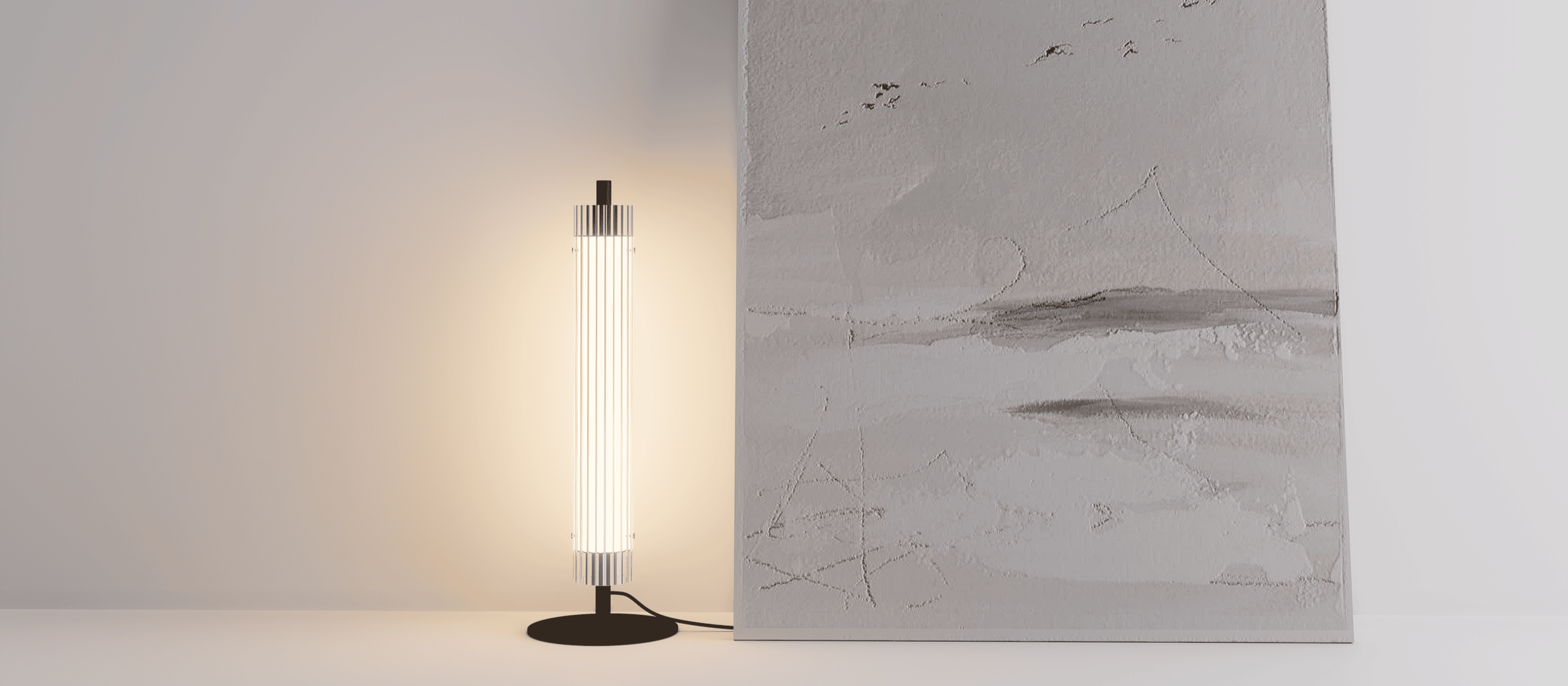
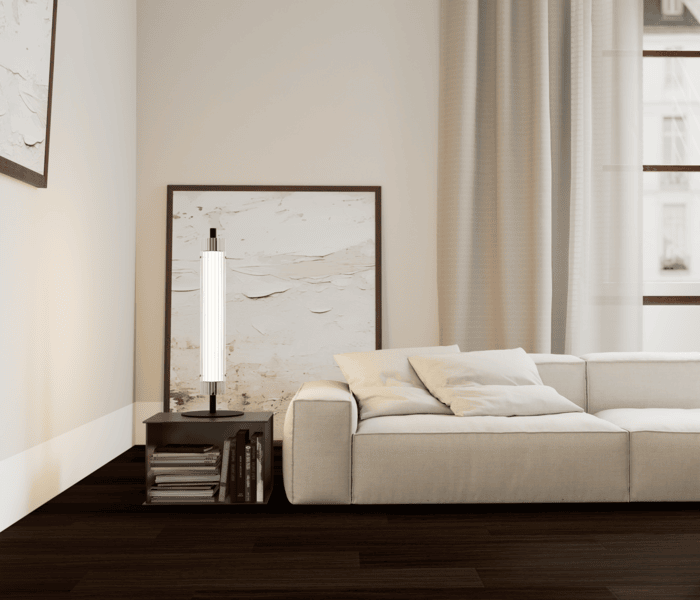
Glass Table is made with ribbed glass tubing that creates a soft, enveloping atmosphere of light. The body is crafted in steel tubing, with an LED on a PCB designed in-house by Insolit, and dimmable light via an integrated dimmer — a fully customisable piece for anyone looking for elegance and sophistication in a single object.
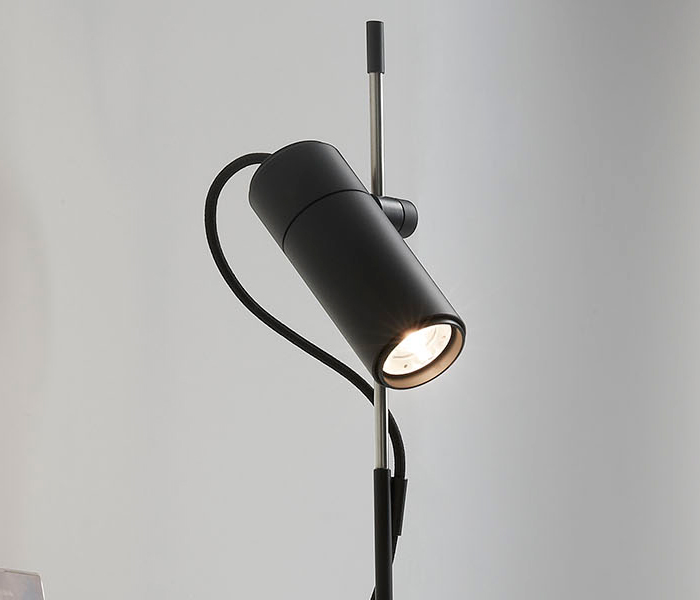
Focus-Line Table carries the technical, adjustable language of the Focus-Line family into a table format — machined aluminium, a stainless steel projector axis, a black fabric-covered cable and a USB port, designed by Jean-Michel Wilmotte. A solution with real functional character for anyone who needs to direct light toward a specific task without giving up on design.
In short
Choosing a table lamp shouldn’t come down to whether it “looks nice” on the furniture: the function you’re going to give it — reading, working, or simply setting a mood — is what should guide every decision, from colour temperature to size. With that function clear, finding the right piece within a design collection stops being a doubt and becomes a gesture of style.
If you’re not sure which table lamp fits your project, or you’re looking for a piece customised in size, finish or colour, get in touch with us — Insolit designs and manufactures in Barcelona, and we’ll help you find the exact piece your space has been waiting for.