 Skip to content

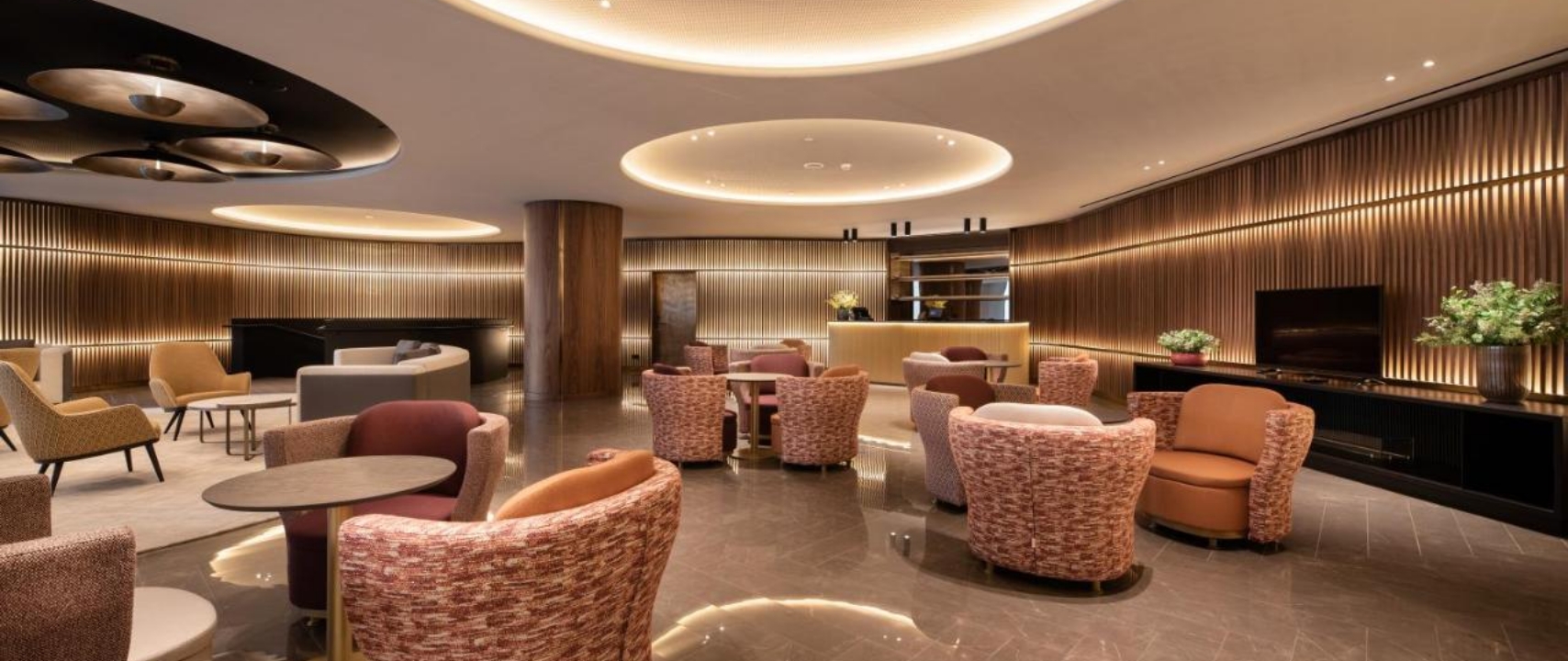
Light is not just a functional element; it is the most intangible and powerful building material an architect or interior designer works with. Beyond the quantity of light (lumens), the quality that defines the emotion of a space is LED colour temperature. Choosing the wrong tone can flatten textures, distort finishes or ruin the atmosphere of a boutique hotel.
At Insolit, we understand that technical precision is vital. That is why, in this article, we break down how to master LED colour temperature to elevate your projects, integrating our lighting solutions designed for excellence.
What exactly is LED colour temperature?
LED colour temperature is the value that indicates the tone of the white light emitted by a light source. It is measured in degrees Kelvin (K). Unlike traditional incandescence, where colour was linked to the physical heat of the filament, in LED technology this value is determined by the composition of the phosphor coating the blue chip.
For a specifier, understanding LED colour temperature is essential to ensure that the rendered vision matches the built reality.
- Low values (Warm): Amber and reddish tones (2200K – 3000K).
- Medium values (Neutral): Pure white tones (3500K – 4500K).
- High values (Cool): Bluish tones (5000K – 6500K).
The Kelvin Scale: Psychology and Application in Design
There is no universal “best” LED colour temperature, but rather one suited to each use. However, in the luxury and contemporary design sector, we work within very specific ranges.
1. Warm Light (2200K – 3000K): The standard of comfort
This is the par excellence range for the hospitality and high-end residential sector. A warm LED colour temperature invites relaxation and softens skin imperfections, something crucial in social areas.
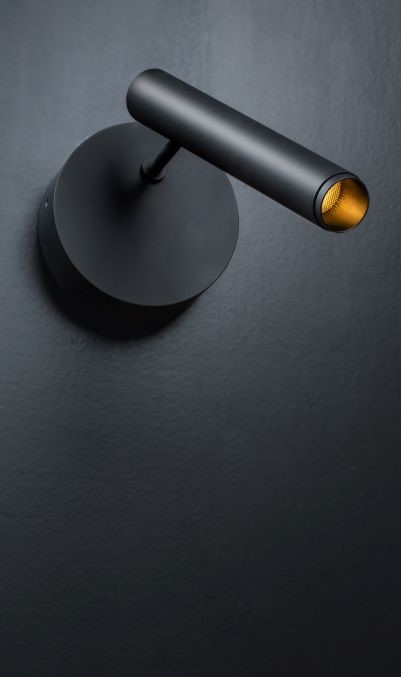
- 2700K (Extra Warm): The favourite option for bedrooms and living rooms. Products such as our Stick Bed, with its precise accent light, use these tones to create headboards that invite rest without glare.
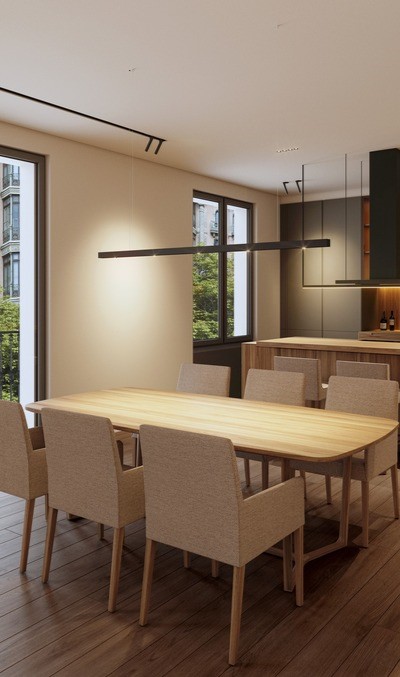
- 3000K (Warm White): The standard in modern architecture. It is cleaner than 2700K but maintains warmth. It is ideal for highlighting woods and natural stones without yellowing them excessively. Our TR Line collection, with its PCB designed by Insolit, guarantees a consistent 3000K that visually unifies the space.
2. Neutral Light (4000K): Pure functionality
Often misinterpreted as “cool”, the 4000K LED colour temperature is neutral white. It conveys cleanliness, order and efficiency. Its use is recommended in:
- Technical work areas (offices).
- Minimalist bathrooms (although the current trend leans towards 3000K with high CRI).
- Professional kitchens.
3. Cool Light (5000K – 6500K)
Rarely used in residential or luxury interior design. This LED colour temperature is reserved for hospitals or industrial areas where extreme visual contrast is vital.
Quick reference table for specifiers
| Kelvin Range | Designation | Atmosphere | Recommended Use in Design |
| 2200K – 2700K | Golden White | Intimate, cosy, hygge | Living rooms, bedrooms, dinner restaurants. |
| 3000K | Warm White | Comfortable, elegant, crisp | Hotels, luxury retail, outdoors, bathrooms. |
| 4000K | Neutral White | Clean, stimulating, technical | Offices, gyms, service areas. |
| 5000K+ | Daylight / Cool | Clinical, sterile | Laboratories, garages, industry. |
The importance of consistency: MacAdam and Binning
One of the greatest challenges when working with LED colour temperature is consistency. Has it ever happened to you that two “3000K” luminaires from different brands look different next to each other? This is due to the MacAdam ellipse.
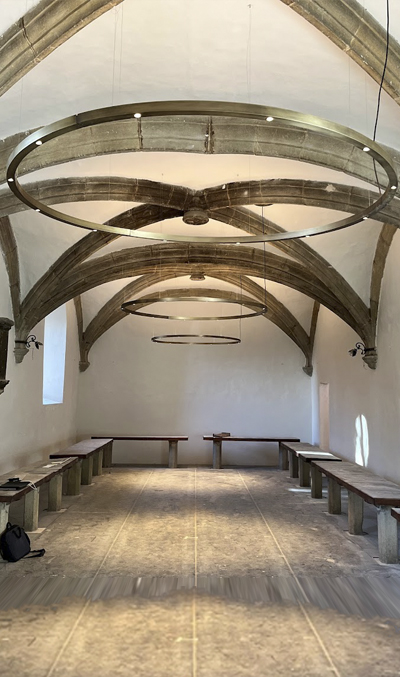
At Insolit, we ensure a rigorous LED colour temperature. Our LED modules, such as those integrated into the majestic TR Huge or the delicate TR Air, are manufactured with strict tolerances (MacAdam Step 3 or lower). This guarantees that if you specify 3000K throughout an entire hotel lobby, the light is homogeneous, avoiding the unpleasant “rainbow effect” of mismatched whites.
Practical applications of LED Colour Temperature by space
1. The Bathroom: 3000K or 4000K?
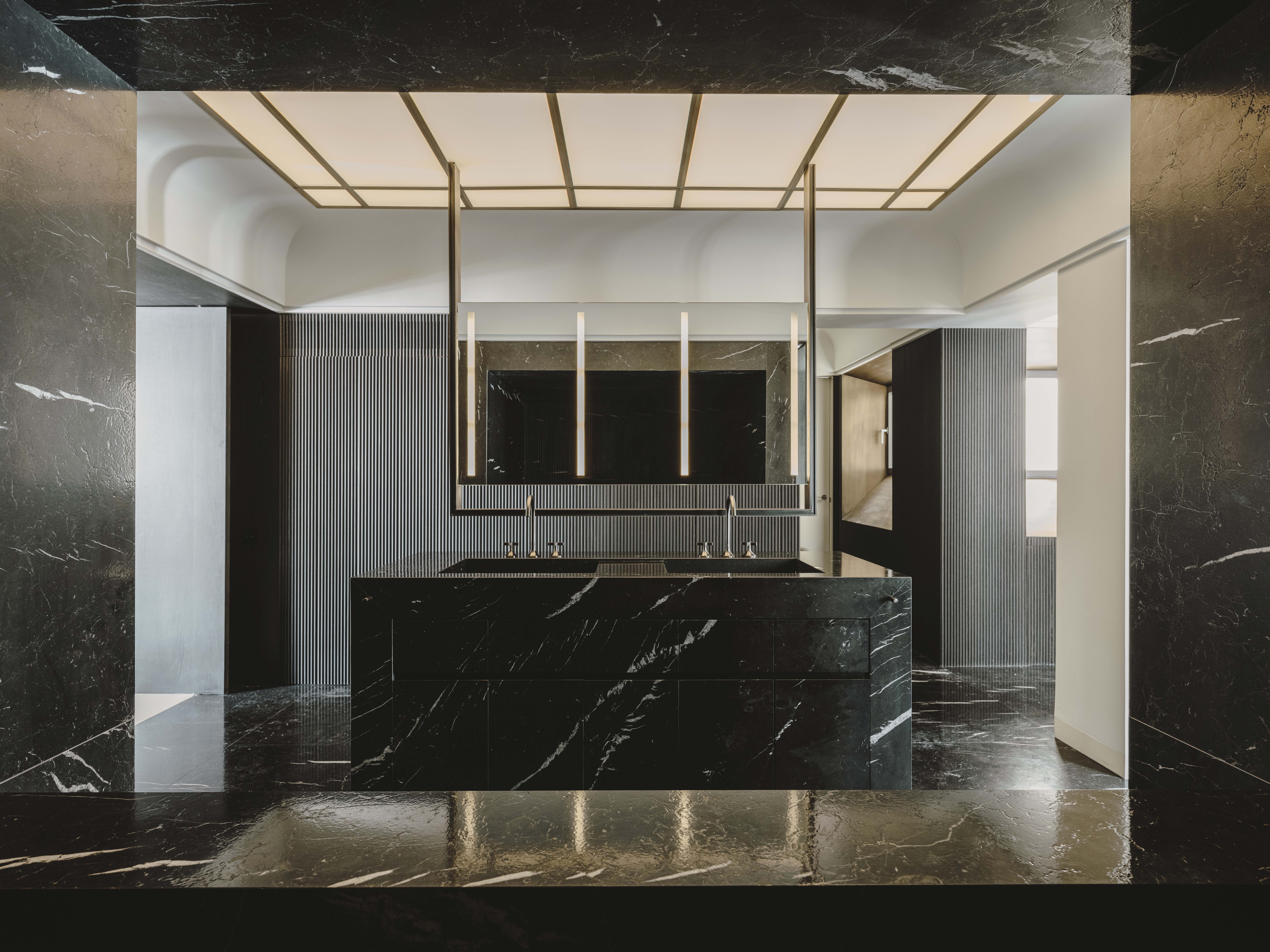
This is the eternal debate. Traditionally, 4000K was used to “see better”. However, in luxury design, we prefer a LED colour temperature of 3000K with a high Colour Rendering Index (CRI>90).
Products such as our TR Moon, a circular wall light with mirror and perimeter light, or the Focus Line IP44, demonstrate that you can have precision without sacrificing comfort. A 3000K light flatters skin tone when looking in the mirror, while 4000K can give an unflattering pale appearance.
2. Outdoor Spaces and Landscaping
Outdoors, light pollution and respect for the night are key. A LED colour temperature of 3000K is perfect for gardens and façades. It enhances the greens of vegetation and the texture of stone.
To illuminate paths or highlight trees, luminaires such as the Focus Line Spike or the versatile Banus Twice (with double micro-projector) at 3000K create drama without looking artificial. Always avoid temperatures above 4000K in gardens, as they generate a false “moonlight” that flattens the depth of the landscape.
3. Living Areas and Versatility
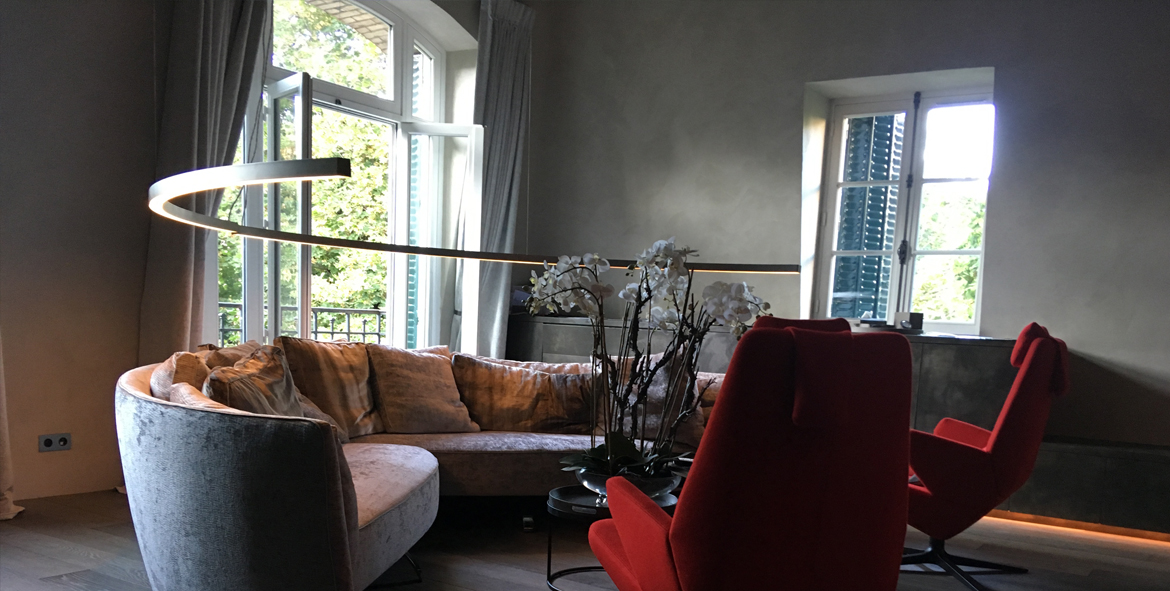
In living rooms, flexibility is luxury. Here, portable luminaires play a crucial role. Models such as the Basic or the LC (with candle holder) allow warm light points (2700K) to be introduced on demand, modifying the overall LED colour temperature of the space by turning off the general lights and leaving only the accent ones.
In addition, for sculptural floor lamps such as the Glass Floor, the use of dimmers is essential. By regulating the intensity, the perception of LED colour temperature becomes warmer and more pleasant, mimicking the behaviour of fire or sunset.
4. Retail and Hospitality
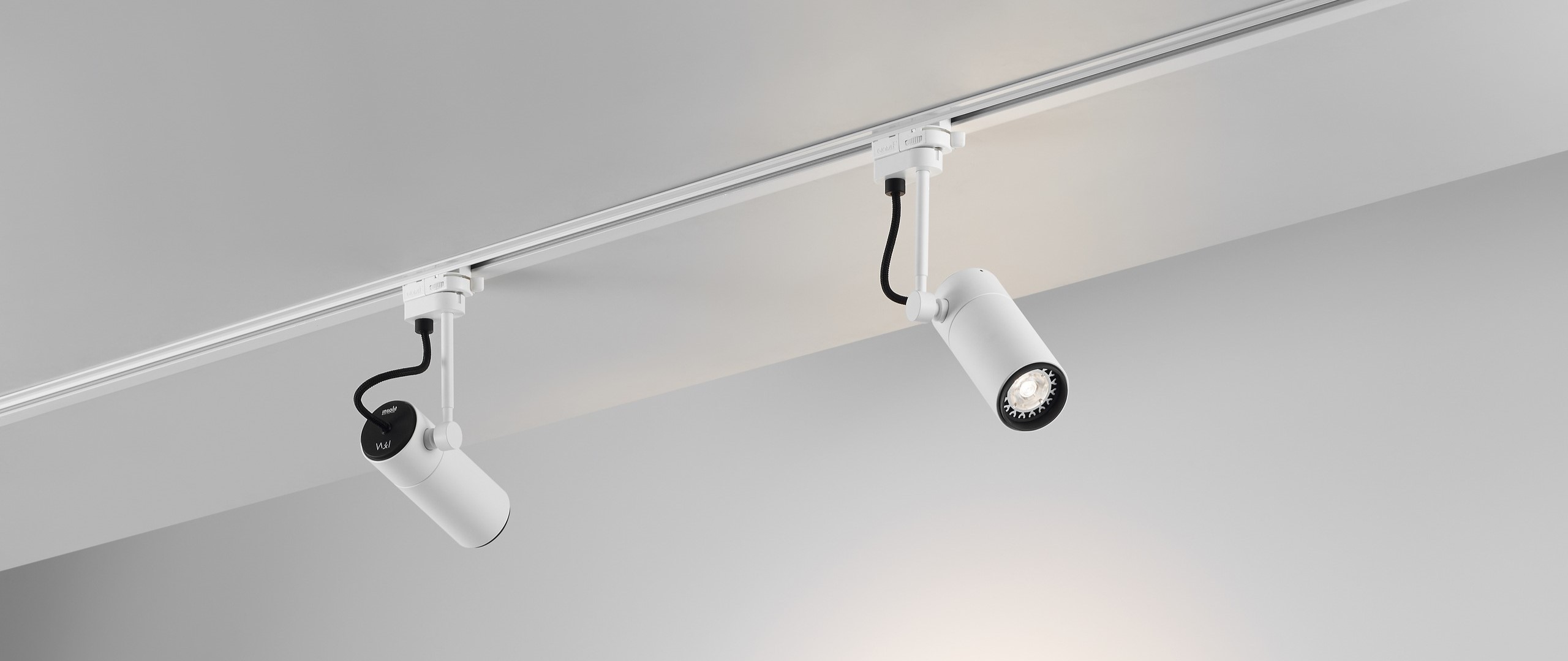
The goal is to sell or seduce. In retail, a LED colour temperature of 3000K or 3500K is usually ideal for maintaining the real colours of the product. However, in restaurants, lowering to 2700K (as offered by our Stick Track System 48v with accent spotlights) creates the intimacy needed for diners to feel comfortable and stay longer.
The key factor: CRI and Temperature are not the same
Often confused, it is vital to distinguish between LED colour temperature (the colour of the light) and CRI (the ability to reproduce colours).
You can have a LED colour temperature of 3000K with a low CRI (70) that makes reds look brown. At Insolit, we prioritise LEDs with CRI 90 or higher. Luminaires such as the Stick Ceiling guarantee that, in addition to having the correct warmth, velvets, woods and works of art look vibrant and real.
Flexibility with GU10 bulbs
For projects where the end client wants to be able to change the LED colour temperature in the future without replacing the luminaire, the Focus Line collection is the perfect solution. Being compatible with replaceable GU10 bulbs, it allows switching from 2700K in winter to 3000K or 4000K if the use of the room changes, keeping the machined aluminium design body intact.
The importance of light as a material
Mastering LED colour temperature means mastering the atmosphere. Do not leave this parameter to chance. Whether seeking the intimacy of 2700K for a private residence with our Glass Table, or the clarity of 3000K for a corporate lobby with the TR Pendulum, at Insolit we have the precise lighting tool. Remember that LED colour temperature defines how the space feels, how materials behave and, ultimately, how the user experiences the architecture you have designed.
Frequently asked questions
What is LED colour temperature?
LED colour temperature is a measure expressed in degrees Kelvin (K) that defines the tone of the white light emitted by a source. It indicates whether the light is perceived as “warm” (yellowish/reddish tones) or “cool” (bluish tones), unrelated to the physical heat of the lamp.
What does a colour temperature of 6000K mean?
A colour temperature of 6000K corresponds to a “cool” or daylight light. It has a markedly bluish tone and provides high contrast. It is commonly used in industrial environments, garages, hospitals or areas where high visual stimulation is required, but rarely in residential interior decoration.
Which is warmer, 2700K or 3000K?
2700K is warmer. The lower the Kelvin number, the warmer and more yellow the light. 2700K resembles the light of a traditional incandescent bulb, while 3000K is a slightly cleaner, less orange warm white.
Which is warmer, 3000K or 4000K?
3000K is warmer. 3000K is considered “warm white”, ideal for homes and hotels. 4000K is considered “neutral white”, sitting at a midpoint between warmth and cool light, being more common in offices and functional kitchens.
How to choose the LED colour temperature?
To choose the right LED colour temperature, analyse the use of the space and the finishes: for relaxation areas (living room, bedroom), opt for 2700K; for general areas, bathrooms and designer kitchens, choose 3000K for a balance between comfort and clarity; for offices and work areas, 4000K favours concentration. Regarding materials, warm woods and stones look better with 2700K-3000K, while pure whites, glass and steel work well with 3000K-4000K.
Which light is whiter, 4000K or 6000K?
6000K light is “whiter” in the sense that it tends towards pure bluish white (cool white). 4000K light is a neutral white that maintains a balance without veering towards blue. Visually, 6000K is perceived as more intense and cool.
Which colour temperature is best?
There is no “best” temperature, but rather one suited to each function. For luxury housing and hospitality, the “best” is usually 2700K or 3000K for the comfort they provide. For precise visual tasks or work environments, 4000K may be superior.
Is a colour temperature of 4500K or 5700K better?
It depends on the environment. 4500K is a neutral light leaning towards cool, acceptable in modern offices or shops seeking visual cleanliness. 5700K is a very cool light, almost daylight, useful in graphic arts, the textile or dental industry where direct sunlight needs to be emulated to evaluate colours, but it is usually too harsh for living environments.
Apply colour temperature control to your projects with the ceiling lights collection by Insolit.