 Skip to content

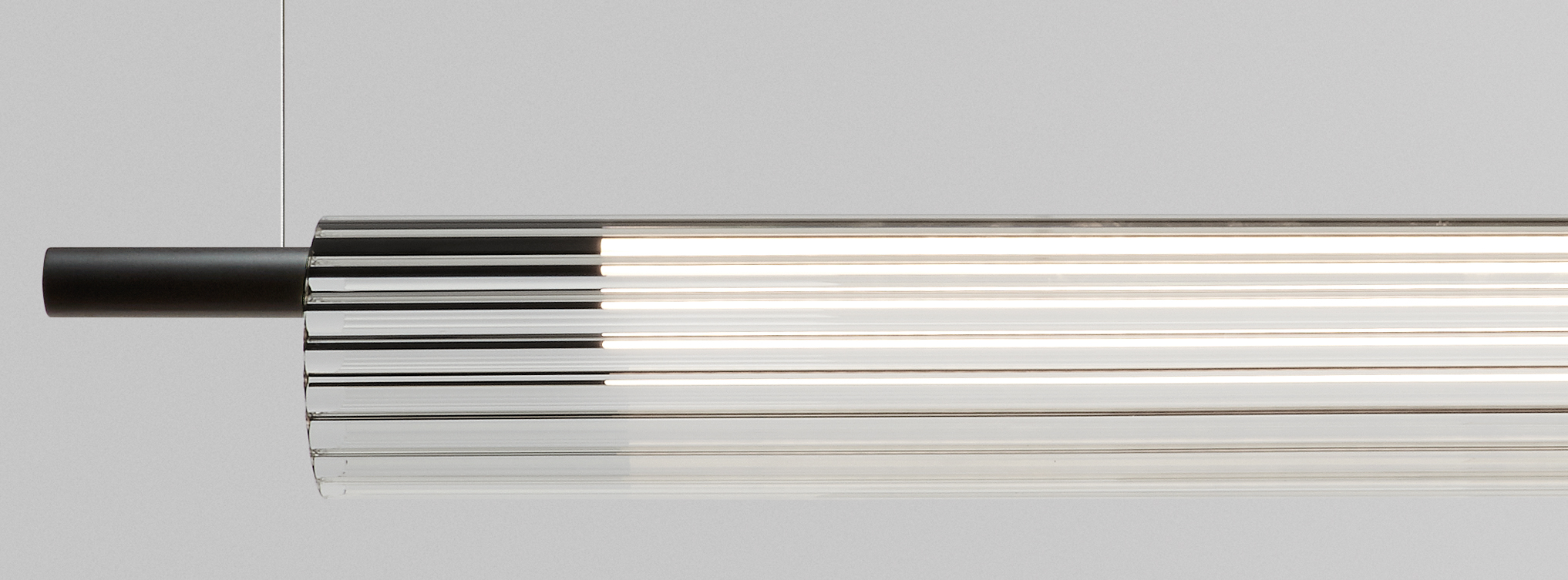
A glass pendant light can bring transparency, texture and presence to an interior. When choosing one, consider the role it will play: illuminating a surface, creating an atmosphere or becoming the focal point around which the composition is organised.
The glass finish, the position of the light source and the dimensions of the piece all influence the result. A clear pendant reveals its interior; an opal surface conceals it; fluted glass introduces a rhythm of reflections and transparency.
The choice begins with this relationship between material and light, then develops through an understanding of the architecture, furniture and people who will use the space.
Glass as part of lighting design
During the day, a glass luminaire contributes to an interior through its volume, reflections and relationship with natural light. At night, its appearance changes when illuminated.
It is therefore worth assessing it in both conditions. A piece that looks discreet when switched off can become much more prominent when its light source is visible.
It is also important to distinguish between glass used as a diffuser and glass incorporated as a decorative detail. Glass alone does not guarantee soft light or freedom from glare. The result depends on the design of the luminaire as a whole.
Which glass finish should you choose?
The appearance of the material helps guide the selection, but it should be assessed alongside the performance of each model.
| Finish | Visual contribution | What to check |
| Clear | Reveals the interior of the piece and preserves views through it. | Whether the light source is visible from normal viewing positions. |
| Opal | Creates a more uniform-looking surface and conceals the interior. | The amount of light emitted and how it is distributed. |
| Fluted | Adds texture and breaks up the view through the material. | The effect of the fluting when the light is switched on. |
| Smoked or coloured | Introduces a tone that becomes part of the interior composition. | How it changes the appearance and transmission of light. |
These are common glass finishes available on the market; availability depends on the collection.

How to integrate a glass pendant light into a project
Relate the piece to the furniture
Above a table, the luminaire should relate to the surface beneath it. The table’s length and width, together with the seating positions, help determine whether a single piece or a group of pendants is more appropriate.
In an open-plan room, a pendant can also define the dining area without creating a physical partition. Its position should respond to the actual furniture layout, even if this does not coincide with the geometric centre of the ceiling.
Consider sightlines and suspension height
The suspension height should allow the light to make its presence felt without obstructing conversation or interfering with circulation.
Check how it looks from the entrance, from the sofa and from a seated position. This helps reveal whether the light source is too exposed or whether the volume interrupts an important view.
Define the lighting the space needs
A decorative luminaire can provide visual presence without meeting all the lighting needs of a room on its own.
Before choosing it, distinguish between the light needed on a table, general illumination and accent lighting for walls or objects. This helps give each fitting a clear role.
Plan for maintenance
Access for cleaning the glass is also part of the design process. With high ceilings or compositions involving several pieces, consider how maintenance will be carried out before finalising the selection.
Glass Pendant: putting fluted glass at the centre of the design
Glass Pendant by Insolit, designed by Josep Lluís Xuclà, combines a fluted glass tube with a steel body. The texture of the glass is one of its defining features.
Its product page lists 2700 K and 3000 K versions with DALI/PUSH dimming. These options allow colour temperature and lighting control to be considered from the early stages of a project, while checking compatibility with the planned installation.
Insolit describes this model as customisable. For a specific proposal, it is worth discussing which adaptations are feasible and how they would affect the final configuration.

When glass becomes a detail
Not every luminaire incorporating glass has a shade made entirely from the material.
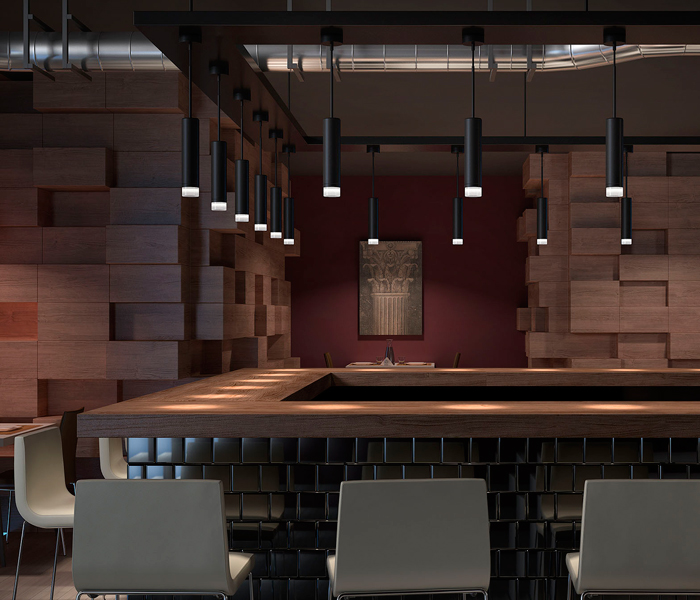
Focus Line Pendant, designed by Jean-Michel Wilmotte, combines machined aluminium with a decorative optical borosilicate glass element. Here, glass serves as a detail within a piece with a more technical character.
The collection features in a documented project at the Guy Savoy restaurant in Paris. Insolit records the manufacture of bespoke lights designed by Wilmotte for the project and lists Focus Line, Focus Line Pendant and Focus Line Track among the products used. It provides an example of collaboration between design and manufacturing in a restaurant setting.
A glass luminaire for your project
The choice becomes more precise when it starts with a clearly defined space: its dimensions, furniture layout and the role the lighting needs to fulfil.
If you are considering a glass pendant light for a home, hotel or restaurant, you can contact Insolit and share plans, references and the anticipated number of units to discuss options and request a quotation.
Frequently asked questions about glass pendant lights
They are generally called glass pendant lights, glass suspension lights or glass hanging lights.
Designs with branches and hanging decorative elements may also be called chandeliers. However, that name does not describe every glass pendant: a tubular fitting or a simple globe belongs to a different category.
You can find them through lighting manufacturers, specialist distributors and design retailers.
For an architectural or interior design project, choose a supplier that provides technical information and can discuss supply arrangements. At Insolit, you can explore Glass Pendant and contact the team to discuss its inclusion in your project.
Design selections for 2026 show interest in sculptural forms, textured surfaces and compositions made up of several pieces. In glass lighting, opal spheres and volumes exploring transparency and layering are prominent. These are trends observed in publications and commercial collections, rather than a universal ranking.
To choose a piece with lasting appeal, consider how it fits the architecture and everyday use, as well as its contemporary aesthetic.
Pendant lights can be grouped into several categories according to their shape and composition:
Single pendants: one suspended piece.
Linear pendants: fittings extending along a horizontal axis.
Circular pendants: hoop or ring-shaped designs.
Multiple or cluster pendants: several suspended pieces grouped together.
Chandeliers: branching structures with several light sources.
Sculptural pendants: pieces with a particularly expressive form.
They can also be classified by material or light distribution. Two lights with a similar appearance may produce very different lighting effects.
Some of the directions highlighted this year include:
Opal glass and spheres, used individually or in groups.
Modular compositions, allowing arrangements to develop through repetition.
Pronounced textures, giving the material a stronger presence.
Silver-toned finishes, such as nickel and chrome, in contemporary designs.
Yes. Clear glass may leave the light source visible, and a textured finish does not guarantee visual comfort on its own.
Assess the illuminated fitting from normal viewing positions and consider its height, light distribution and dimming options.
This depends on the model and manufacturer. It is important to distinguish between selecting a catalogue configuration, adapting an existing product and developing a bespoke piece.
An enquiry should set out the project requirements so that the available modifications can be confirmed, without assuming that every model offers the same possibilities.